William Yandell Elliott
A Life in the American Century
H. Russell Smith Professor of Government & International Relations Emeritus, Pomona College
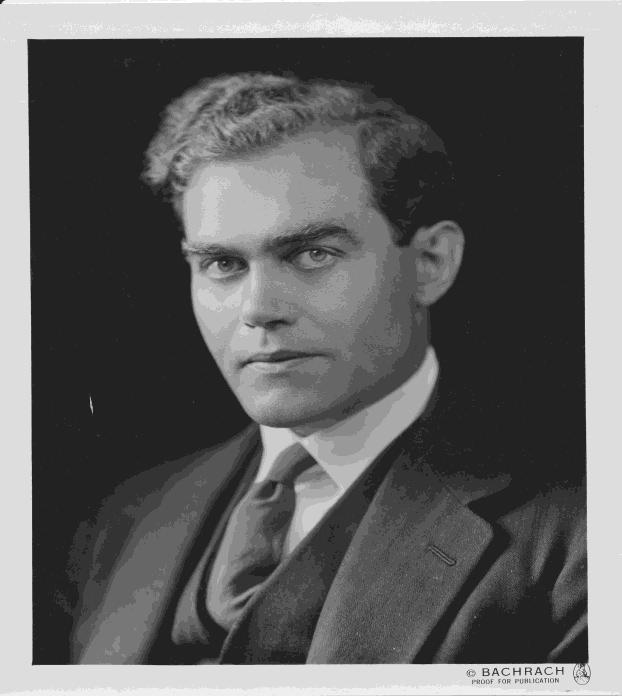
1896–1917
Tennessee and the Fugitives
William Yandell Elliott was born in 1896 in central Tennessee and raised in a society fractured by civil war (his family supported the Union). This explains his lifelong obsession with national unity.
The Fugitives were a group of young American poets who first met at Vanderbilt University just as the United States was entering World War I. This was one of the most important American literary groups of the Twentieth Century.
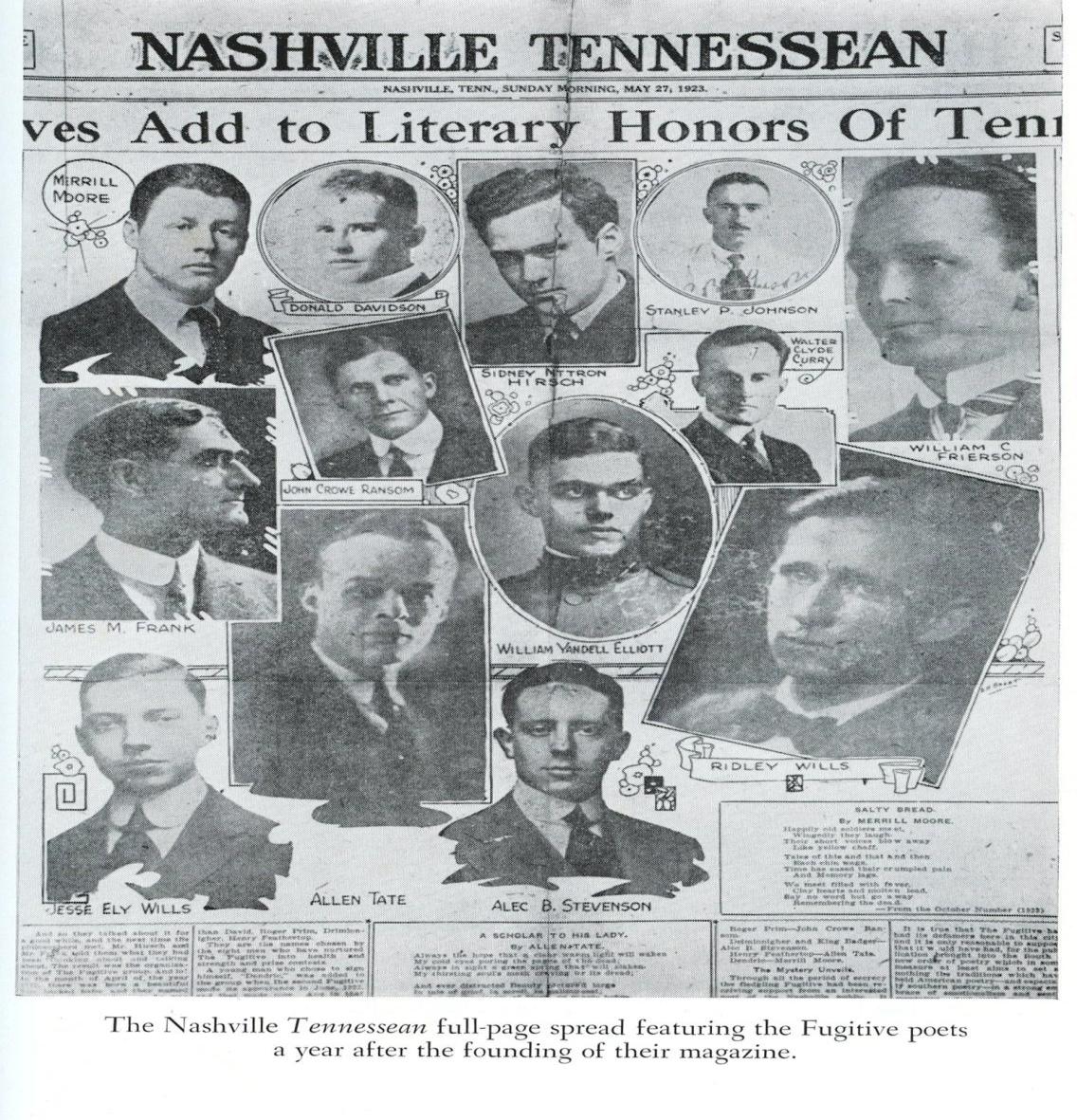
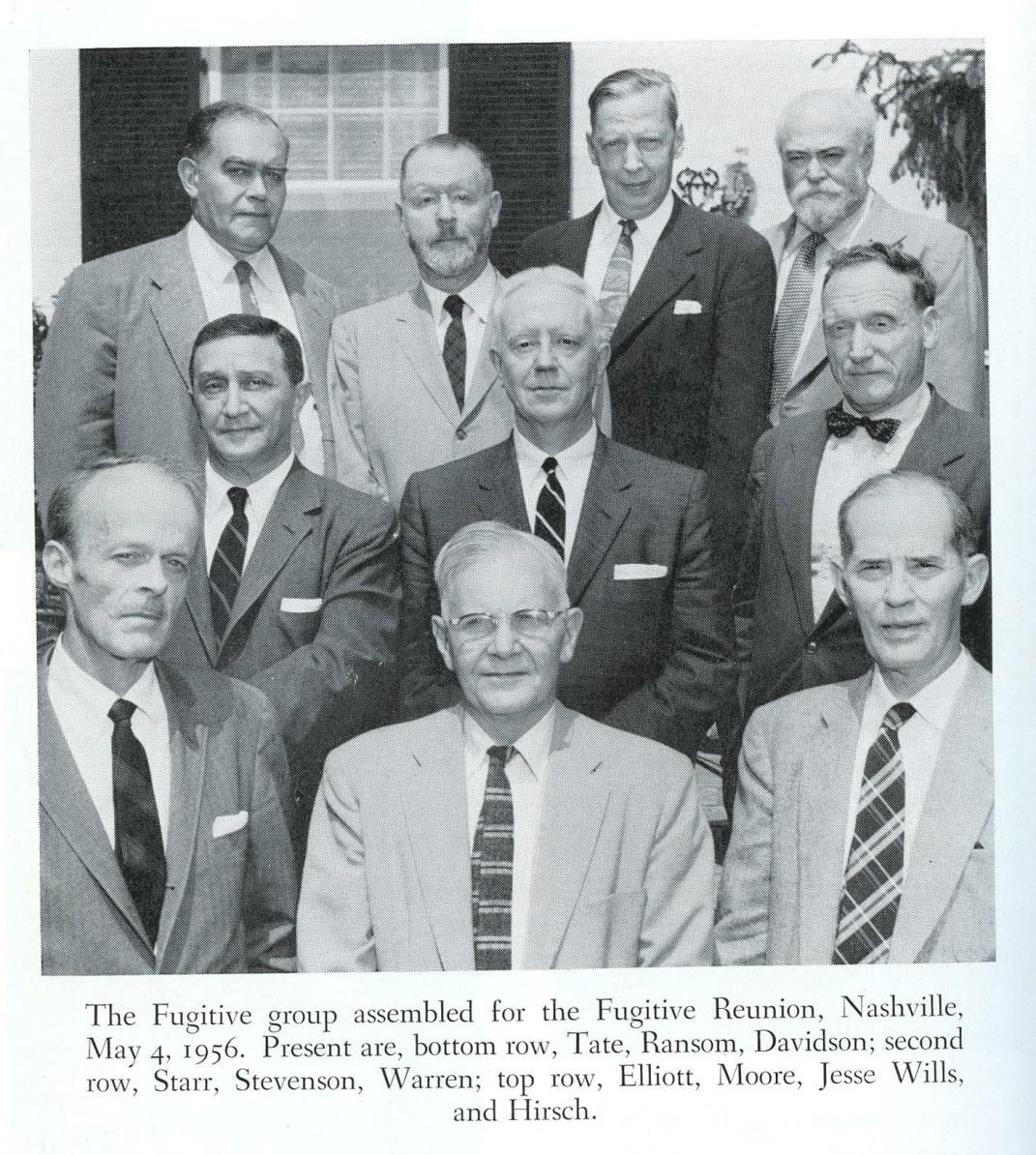
The Encyclopaedia Britannica entry states that they were “young poets and critics formed shortly after World War I at Vanderbilt University in Nashville, Tenn., some of whom later became distinguished men of letters. The group, led by the poet and critic John Crowe Ransom, devoted itself to the writing and discussion of poetry and published a bimonthly magazine, The Fugitive (1922–25), edited by poet Allen Tate. Other important members of the group were the poet, essayist, and critic Donald Davidson and the novelist and poet Robert Penn Warren.”
1918
The Great War
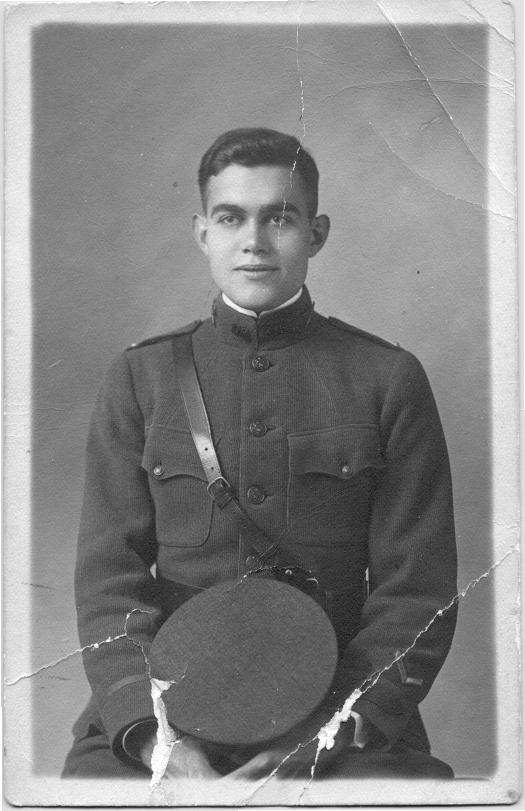
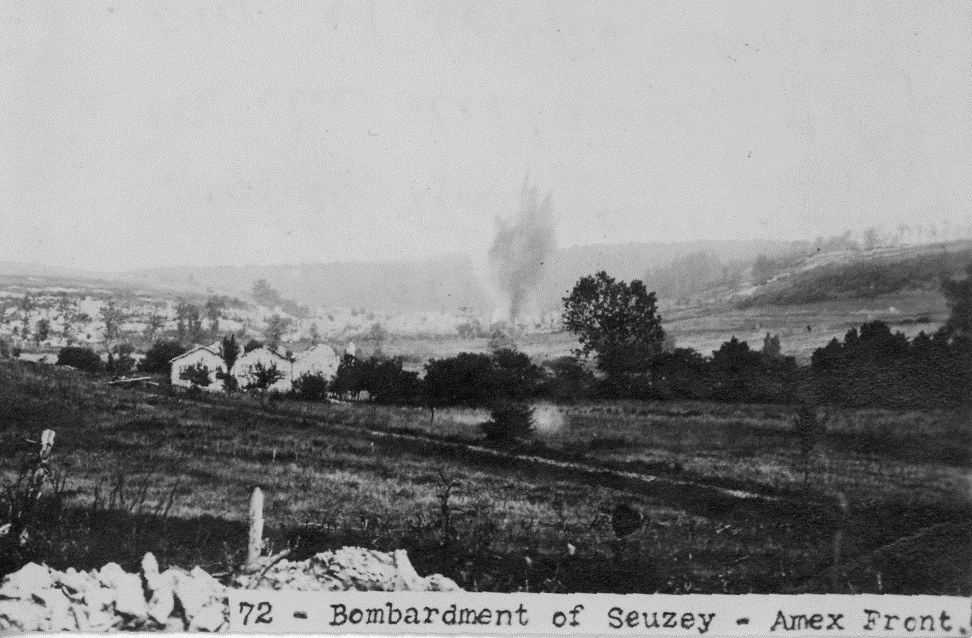
Elliott helped recruit a Tennessee National Guard artillery unit, and went to France in 1918, where he participated in the two final major offensives of World War I. His Battery D, 114th Field Artillery Regiment fought in the St. Mihiel Salient and then the bloody Meuse-Argonne campaign in September-November 1918.
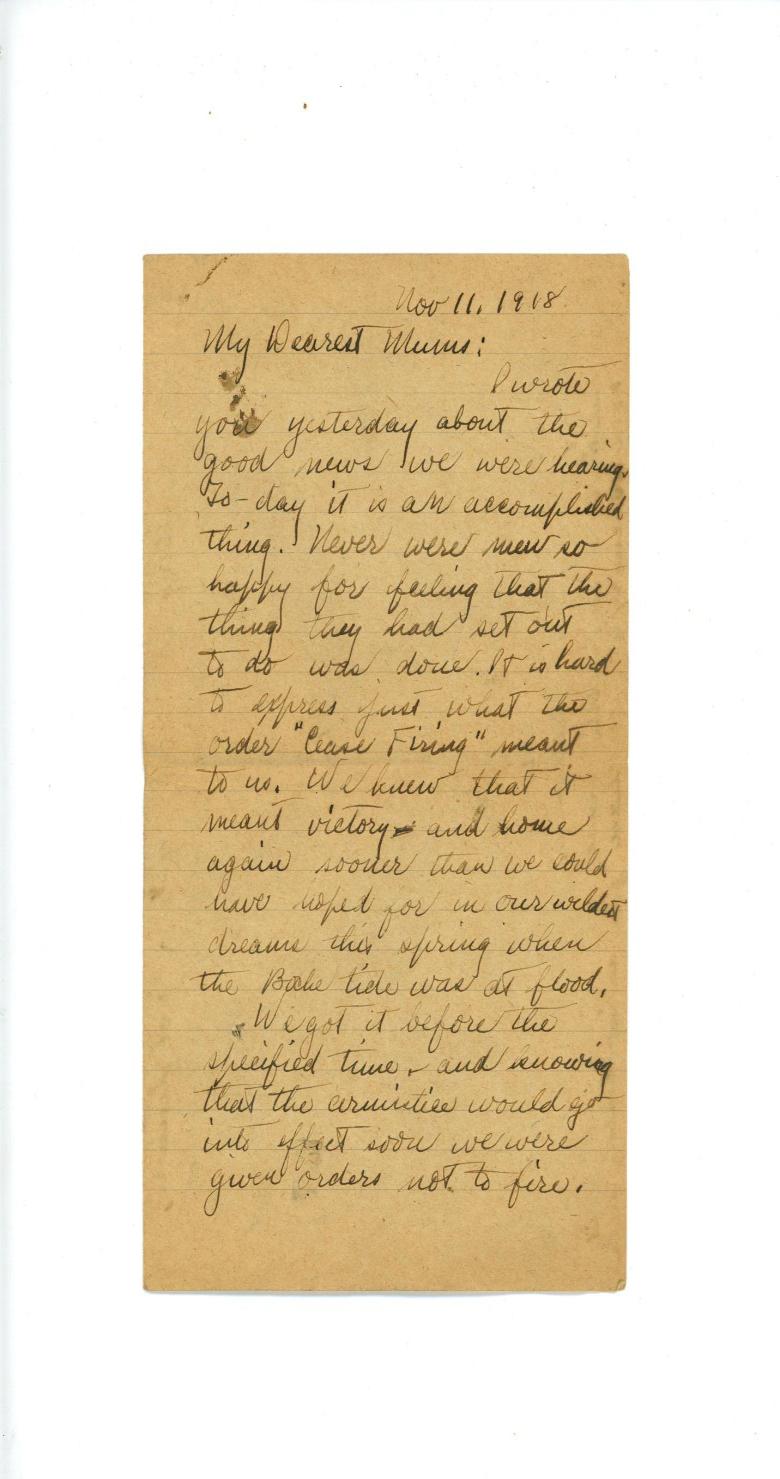
First page of an eight page letter written by Elliott from the front lines in France to his mother on the day the World War I Armistice was signed, November 11, 1918. In the rest of the letter he describes in detail the final hours of the war as he experienced it. He was gassed in the final days of the war and later sent to a hospital in Paris to recover.
His letter read, in part:
“After the day had come and we had left the camouflaged batteries to avoid attracting attention to them, and the wet, weary men had turned in, except for guards, for a few hours of such rest as they could find in the nearby trenches, we got that blessed order. The men were too tired to be enthusiastic to any degree then, but when they had rested and eaten they were the happiest lot you ever saw. A sort of dumbfounded disbelieving happiness that wouldn’t trust itself to credit this wonderful news as anything but a rumor. … Suddenly, just before the time limit was up two whizz bangs came whistling along and burst in front and behind us. …Then dead silence for a moment and a single allied gun boomed forth the last retaliatory shot, and it was 11 o’clock and the war was over. For I think that is what such an armistice as we have imposed will mean. When we came loitering back in the afternoon along the same route, the protective mists of the morning had lifted. We walked along that Hun hated road for more than a kilometer in plain view. Not a gun spoke, nor had one spoken for the space since that last angry boom of one of our big fellows trying to settle the debt of that last Boche [shelling]…”
“Instead the infantry was coming out of the lines in columns singing, and no efforts at concealment were any longer attempted. From their dugouts even the secretive Frenchmen were pouring out, grinning in a dazed sort of way their appreciation of this miracle. But the funniest demonstration of all was left to the Boche. Just at dark he started along the whole front as far as you could see in either direction the hugest display of pyrotechnics I ever saw. It was like an old fashioned Fourth. Thousands of multicolored rockets whirred their way up into the dark. There were signal rockets of every description used flaring over the whole heavens with a similar amount of signal lights and flares. Occasionally a huge red glare and a column of white smoke would lighten up the sky and then fade out.”
“They were celebrating it like a fest day or a holiday, with green and red, and white, and yellow, and every conceivable kind of fireworks, all at hand in the trenches. Only yesterday we were laying down barrages on them. Only last night we were sweating blood trying to bring those tyrants, the guns, to bear on them from close up. And only this morning they were shelling us at a lively clip. Yet tonight not a noise on the entire front, although we remain on the qui vive. …No one can read what the future holds forth. No one can prophesy. But it is certainly reasonable to expect that a better day is at hand. Everything points that way, that we can see.”
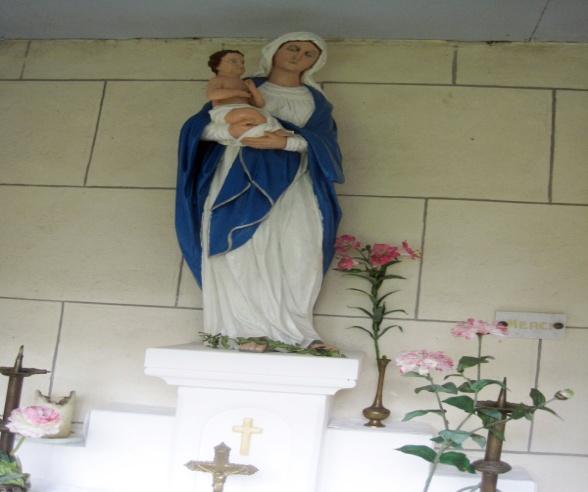
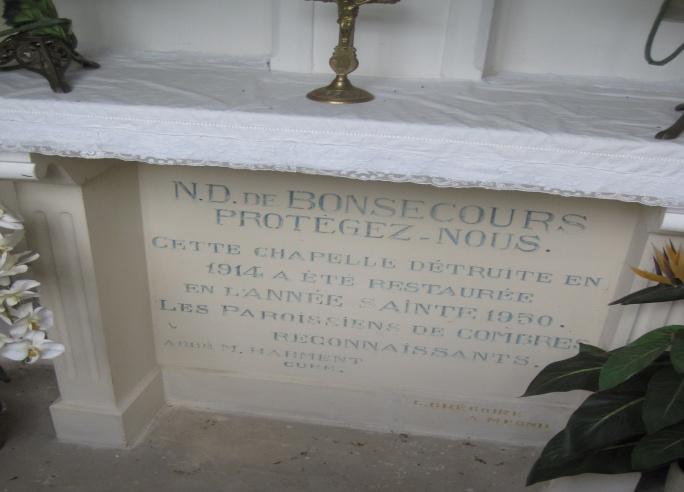
“A queer little incident occurred just after we had passed out of the harassing of the Boche’s battery. We took an unfrequented little short cut through the hills. Off to one side a little was a shrine and a votive tablet. It was to “a Notre Dame de Bon Secour Protegez Nous” which means “to our Lady of Needed Aid Protect Us.” The quaintly beautiful shrine was scarred with the tornado storms and shelling that had played around it, but its features were unmarred and stood there mutely, “a friend in need” to many.”

1918–24
Paris and Oxford
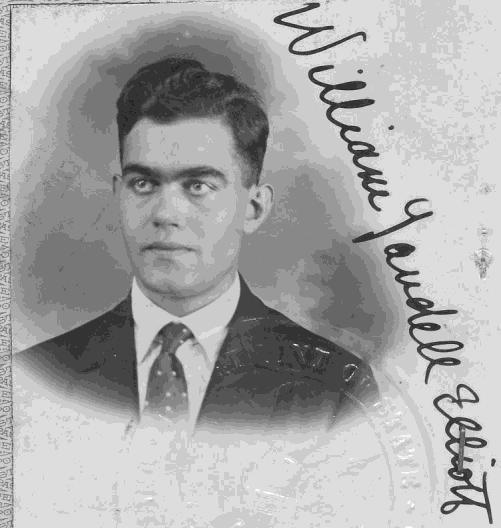
Elliott’s 1922 passport. While at Oxford. Elliott was a Rhodes Scholar at Oxford in 1922-24. There he met the artistic and intellectual titans of the era: W.B. Yeats, T.S. Eliot, Bertrand Russell, Edmund Blunden, Robert Graves, Anthony Eden, and John Masefield.
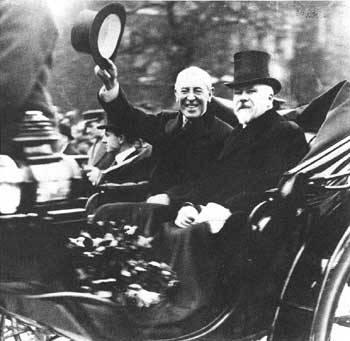
“When I was in the hospital in Paris in 1918, I was lucky enough to see the entry of Wilson into Paris after the Armistice. [December 14, 1918] Europe rocked and was shaken by the roll of those carriage wheels because he illustrated with his vision of the fourteen points during the war, which helped win that war, and by the concept of a world under law, the League of Nations covenant, the dreams of many people.”
1925–39
Harvard and the fight against fascism
Elliott’s academic career started in 1924 at University of California at Berkeley and in 1925 he joined the Government Department at Harvard and was promoted full professor in 1931, a meteoric rise by Harvard standards. On the strength of what was to be his most important book, The Pragmatic Revolt in Politics (1928), a prescient forecast of the rise of fascism which led to World War II, he became one of the youngest academics ever to achieve the rank of full professor at Harvard. This book was a broadside critique of the relativism which came to dominate American intellectual life as the dislocations of the Civil War, and then WWI eroded the certitudes of moral and political values. His specific target was, presciently, the rise of fascism and the seeming moral indifference or even support this evoked from Western intellectuals.
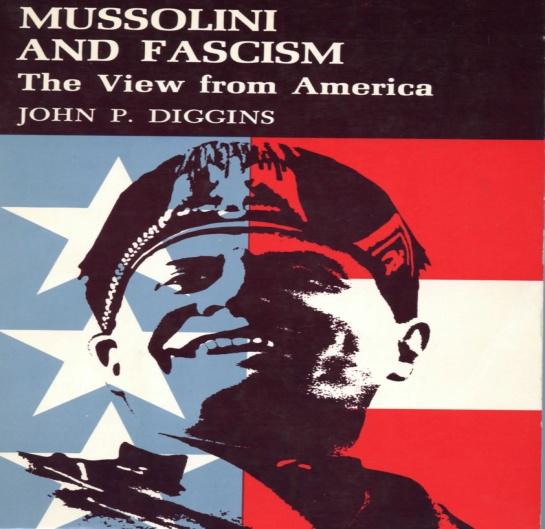
In America during the 1920s and 1930s conservatives were generally approving of Mussolini’s fascism as an antidote to social anarchy, the Communist left tended to ignore it at first because the Party did not instruct them otherwise, and fascism appealed to many liberals because of “experimental nature, anti-dogmatic temper, and moral elan.” In John Diggins’ authoritative study of American views of fascism in this period, he notes that because of these attitudes on the part of many American intellectuals, “… the fact that Fascism received a ‘pragmatic sanction’ from some American liberals stirred attacks from intellectuals both in Europe and in America. …The burden of taking up the anti-pragmatic assault in the United States was assumed by William Y. Elliott, professor of government at Harvard.”
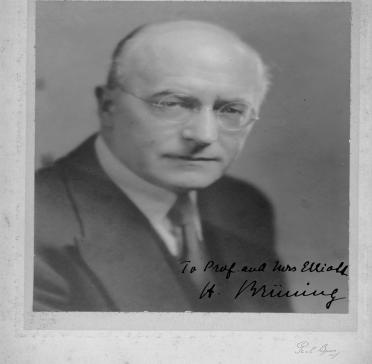
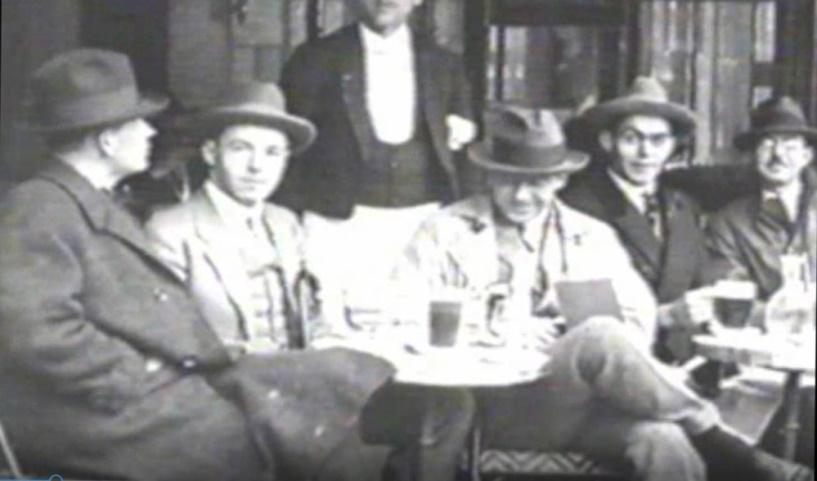
Heinrich Brüning was the last Chancellor of the ill-fated Weimar Republic. Elliott was instrumental in bringing him to the United States and securing a job for him in the Government Department at Harvard. Elliott played a key role in the resettlement of European intellectuals fleeing fascism.
Related to Elliott’s assault on pragmatism was his rejection of the “scientific” or behavioral dimension of political science which was beginning to dominate the discipline in the 1930s. The eminent authority on the development of the discipline of American political science, John Gunnell, considers the debates between Elliott and George Catlin during this period as one of the seminal controversies of the dawn of the modern era of political science.
“Despite the importance of Charles Merriam's role in the history of American political science, his work was not the discursive axis of the paradigmatic disciplinary shift that took place in the first quarter of the 20th century. It was the arguments of G. E. G. Catlin and W. Y. Elliott that most distinctly represented the transformation in both the theory of democracy and the image of science, and that, for the next two generations, set the terms of the debate about these issues as well as about the relationship between the mainstream discipline and the subfield of political theory. And, despite the theoretical and ideological differences between Catlin and Elliott, their exchange points to the intensely practical concerns that originally informed the controversy about the scientific study of politics.”
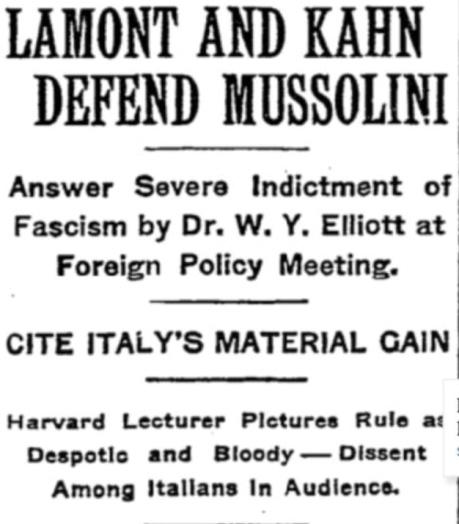
Elliott did not confine his early opposition to Mussolini to Harvard, or to academic journals. In early 1926 he also took on the banking interests of J.P. Morgan in a vigorous debate reported by The New York Times before a distinguished gathering of the Foreign Policy Association at the Hotel Astor in New York. Thomas Lamont was the head of the formidable J.P. Morgan banking empire and his fellow Mussolini-supporter was Otto Kahn, a very wealthy New York financier. “Of all American business leaders, the one who most vigorously patronized the cause of Fascism was Thomas W. Lamont. Head of the powerful J.P. Morgan banking network, Lamont served as something of a business consultant for the government of Italy.”
This was Elliott’s first appearance on the national scene, and it introduced him to the East Coast Foreign Policy Establishment. As Mussolini went from words to action in launching his conquest of Ethiopia in 1935, Elliott once again publicly crossed swords with Lamont and the New York Establishment.
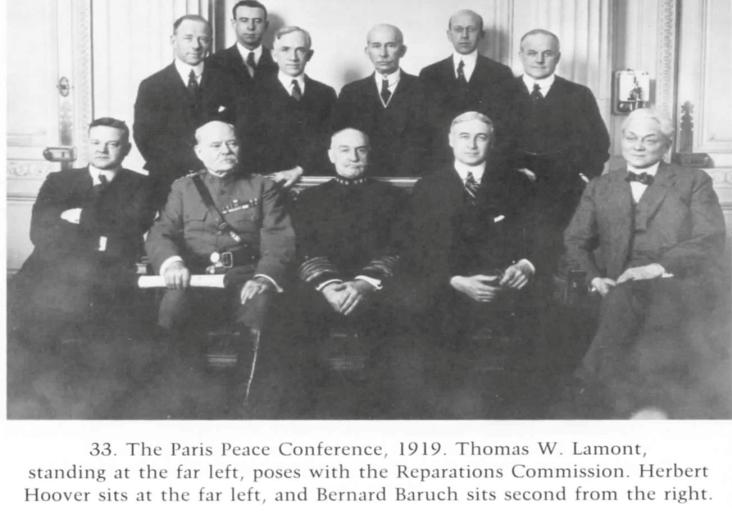
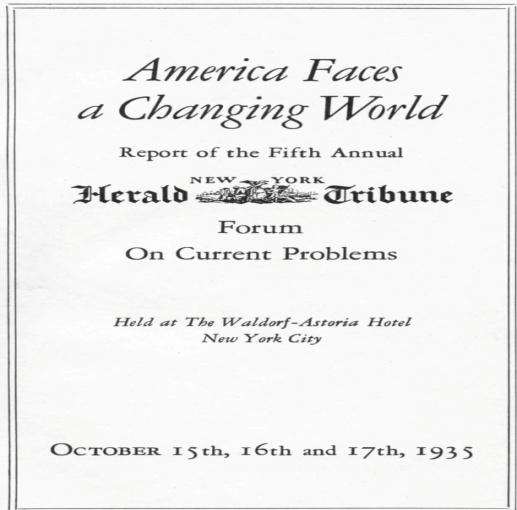
In 1935 Elliott again encountered Lamont, now the honored guest of the New York Herald Tribune publisher, arbiter of New York Society circles, and Republican power broker Helen Rogers Reid at the Tribune’s prestigious annual conference on current issues. Since Mussolini had recently invaded Ethiopia, which initiated the floodgates of aggression in the 1930s, Elliott’s expertise was called on as an invited speaker.
After the conference, Lamont wrote Elliott a conciliatory letter.
“Dear Professor Elliott: Ever so many thanks for your letter of October 22nd. If you and I had a chance to talk over together some of these international matters, I think we should find very little difference in our viewpoint. I could, for example, give you a considerable number of instances in my own personal experiences which led me to believe ten years ago that Mussolini intended to carry out a serious and restrained international policy. I think you would be interested in these. Whether his present dive off the deep end has been due to economic pressure, I am rather inclined to doubt. ... This decision was due largely, as I saw it, to a matter of pride. I am inclined to believe that the same quality on an enlarged scale accounts for the present venture. I suppose that it is the well known delusion of grandeur.”
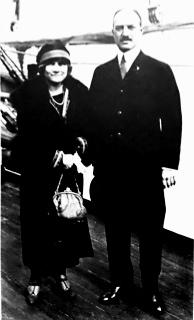
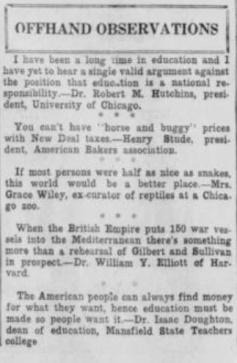
Elliott discovered that Helen Reid had pulled the plug on the national radio transmission of his speech at the Waldorf Astoria in New York City – he suspected it was because he had been critical of Lamont. Mrs. Reid denied everything with an air of aggrieved injury at the implication. The imperious doyenne of New York society was known as “Queen Helen” in smart New York circles. “The Reids lived sumptuously in a Florentine fortress on Madison Avenue, with a dinner table for eighty and the wealth and social prestige to fill it with interesting people.” She in turn was miffed that Elliott had snubbed her invitation for a post conference dinner. Although Helen Reid succeeded in depriving Elliott of a national audience for his anti-Fascist views, ironically one of his bon mots about the British navy in the Mediterranean being “more than a rehearsal of Gilbert and Sullivan,” uttered during his speech, was picked up by a news syndicate and published in dozens of small market newspapers throughout the country – giving him an outreach to Middle America and exposure to the broad public that he rarely enjoyed during the remainder of his career.
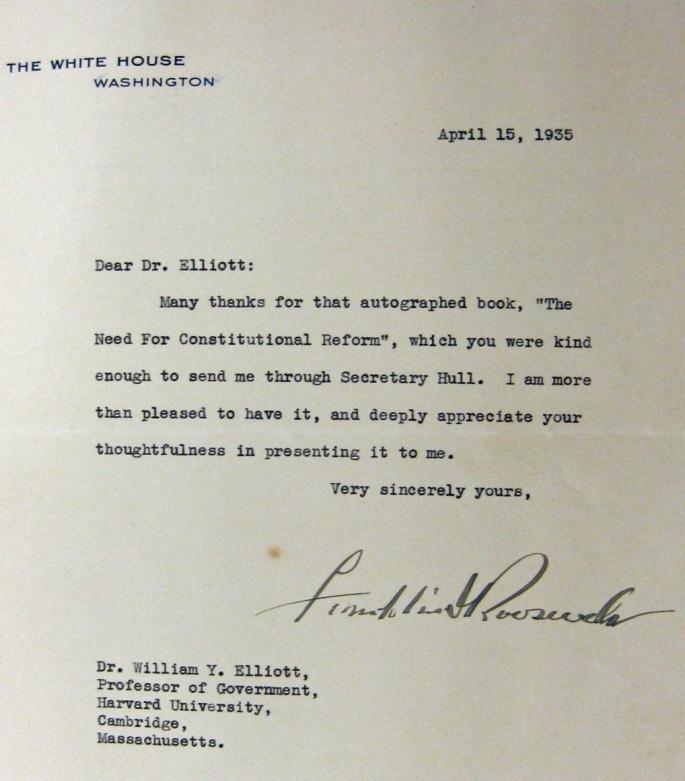
Elliott’s writings, especially The Need for Constitutional Reform: A Program for National Security (1935), and contributions to the President's Committee on Administrative Management (1937) also known as the Brownlow Committee, which led to the creation of the Executive Office of the President and laid the foundation for what was later called “The Imperial Presidency” brought him into closer contact with the Roosevelt administration, and he became a “Brain Truster” commuting to Washington and advising on issues of public policy.
1940–41
The case for intervention
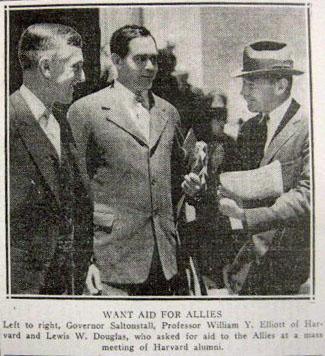
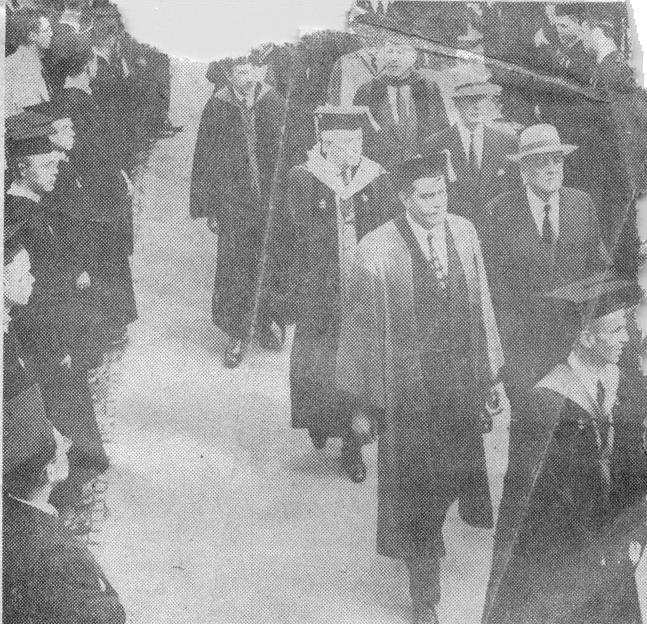
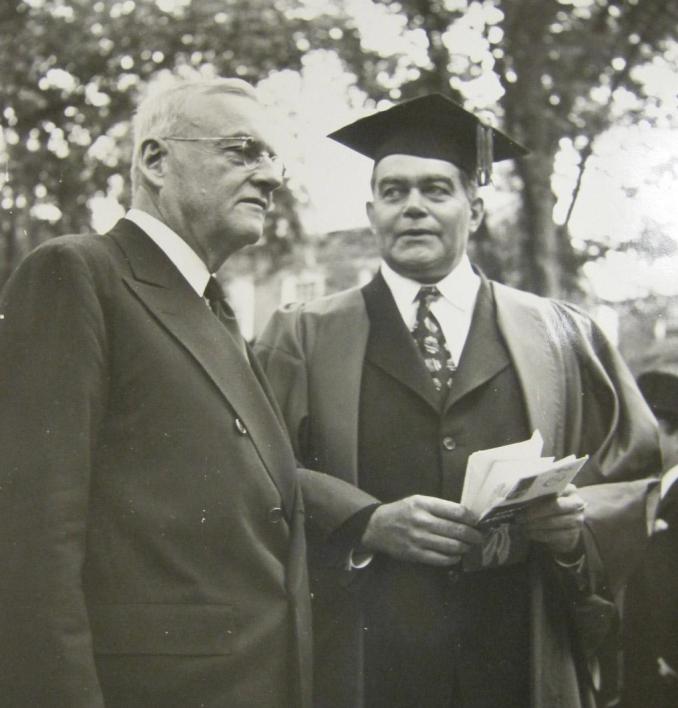
Elliott at Harvard graduation in June 1940 where he gave a ringing pro-interventionist talk following the Fall of France. He is flanked by Massachusetts Governor Leverett Saltonstall and Lewis W. Douglas, former Roosevelt Director of the Bureau of the Budget.
A newspaper account wrote “Echoing Hull’s statement that ‘Our American history has not been achieved in isolation from the rest of mankind!’ ... Harvard professor of government, William Yandell Elliott, also spoke, asserting that the United States was already at war with Nazi Germany and called for the United States to enter the conflict as a full military belligerent. Referring to those who advocated all aid to the allies ‘short of war,’ he declared that, ‘for myself, today more than ever, I ask, why “short of war”?’”
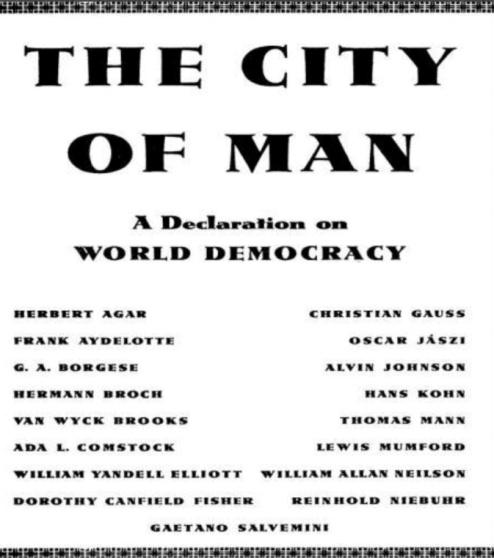
The now-forgotten manifesto The City of Man: A Declaration on World Democracy, was composed in 1940 by a group of prominent American and European anti-isolationist intellectuals, including Thomas Mann and Reinhold Niebuhr. Written in response to the victories of Nazi Germany, the manifesto declared that the United States had a new global responsibility not only to lead the war against fascism and Marxism, but also to establish a global order of peace and democracy under U.S. hegemony.
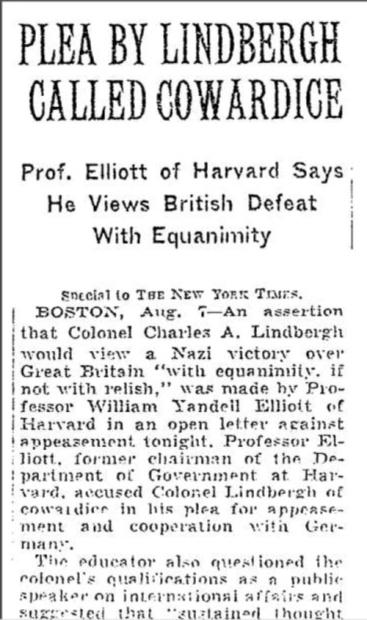
The 1940 Destroyers for Bases deal launched Elliott into a national controversy. It was opposed by Col. Charles A. Lindbergh in a manner which launched a strong attack by Elliott in an open letter, parts of which were reprinted in a New York Times article. General Pershing, commander of American forces in World War I, had declared in a broadcast on August 1, "I am telling you tonight, before it is too late….If there is anything we can do to save the British fleet, we shall be failing in our duty to America if we do not do it." [Newspaper editor Herbert] Agar recalled this as "the turning point in our effort to create a public opinion favourable to the president's taking action."
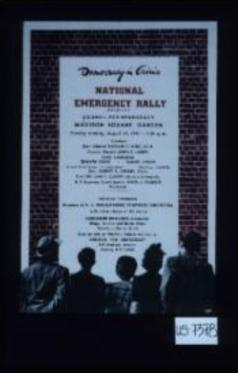
Probably the most visible program sponsored by the Council for Democracy was a mass rally held in Madison Square Garden on August 17, 1941, titled “Democracy in Crisis” and billed as "an emergency rally." This event was presided over by Justice Owen J. Roberts of the U.S. Supreme Court. Speakers were Admiral Richard E. Byrd, the famous explorer, the poet Carl Sandburg, the governor of Connecticut, a labor leader, and Elliott. The New York Phil with eighty members, and a 100 voice chorus performed American songs.
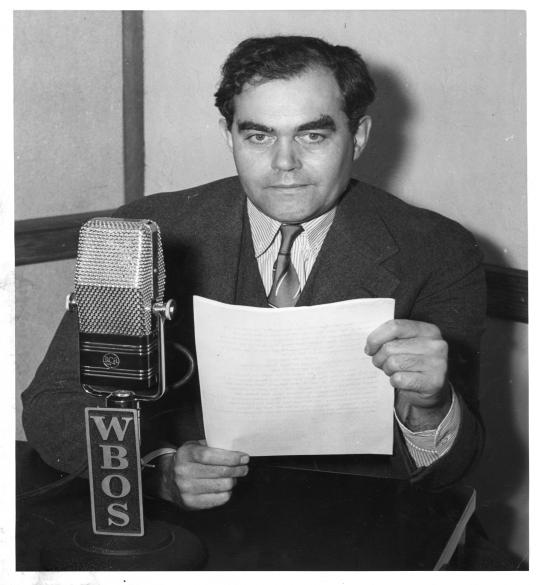
Following the event Admiral Byrd wrote Elliott
"Dear Dr. Elliott: I have read your speeches and they are magnificent. I only wish I had a chance to go over them before my Madison Square Garden talk. I want to congratulate you warmly. Every man and woman in this country should have a copy of your speeches. Your Madison Square Garden talk was much better than mine. … Keep up the good work…"
1940–45
Mobilizing for war
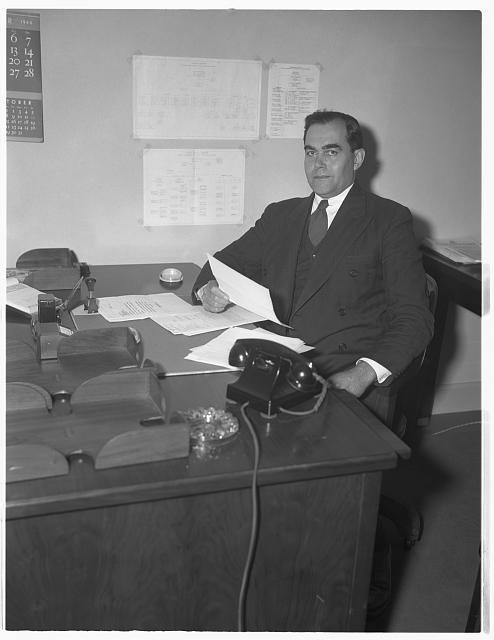
This was one of the first war mobilization organizations set up by President Roosevelt to prepare the United States for the coming war. It was the precursor of the War Production Board which commanded the wartime economy in the United States.
In the months prior to Pearl Harbor Elliott became the Deputy Chief, Stockpile and Shipping Imports Branch of the Office of Production Management, the primary war mobilization agency of the government and precursor of the War Production Board. In this capacity he succeeded in accelerating the purchase of key industrial raw materials from Southeast Asia just prior to Pearl Harbor and speeding the process of procuring them by ordering the offloading of all imports from Asia at West Coast ports instead of sending some to the East Coast via the Panama Canal. After the war Donald Nelson, director of the War Production Board during much of World War II, observed,
“One thing I always mention is the tremendous job Professor Elliott did at this time in bringing in stock piles from abroad. Without his follow through we would never have had the piles of hemp, manganese, chromium that we did, and could not have continued the war at the same pace.”
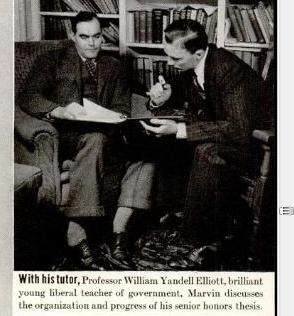
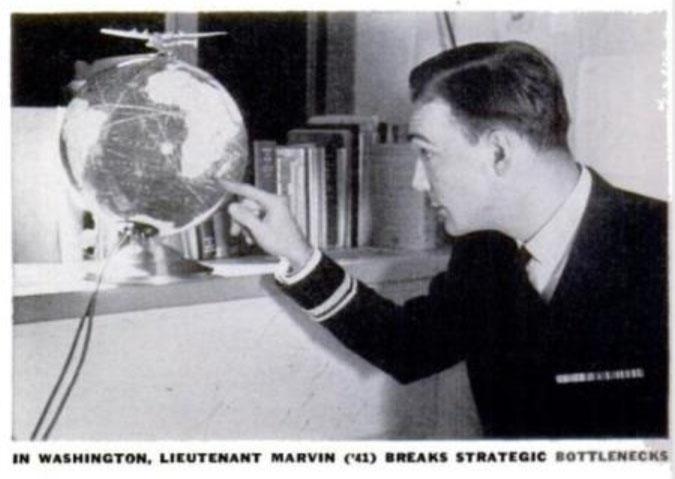
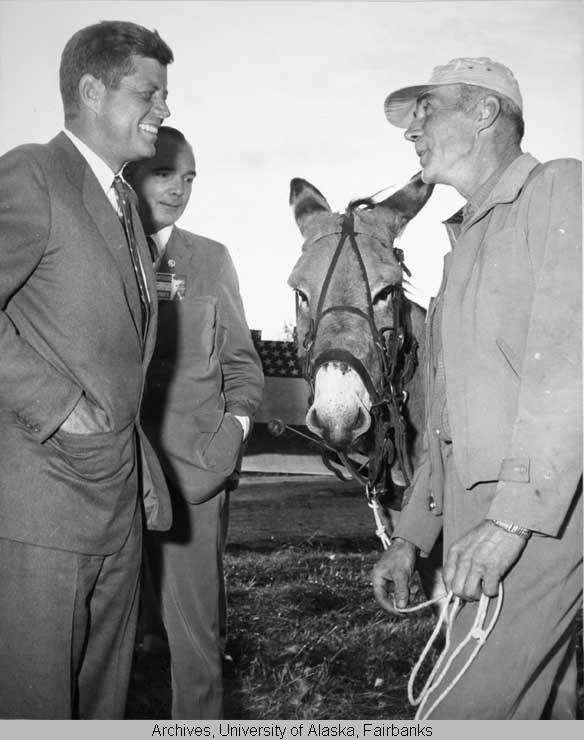
He later became a senatorial aide and side-kick of John F. Kennedy. “Marvin was given the dubious assignment of lining up women for Kennedy during the 1960 presidential campaign.” C. David Heymann, Bobby and Jackie: A Love Story, (New York: Simon and Schuster - Atria Books: 2009), p.25
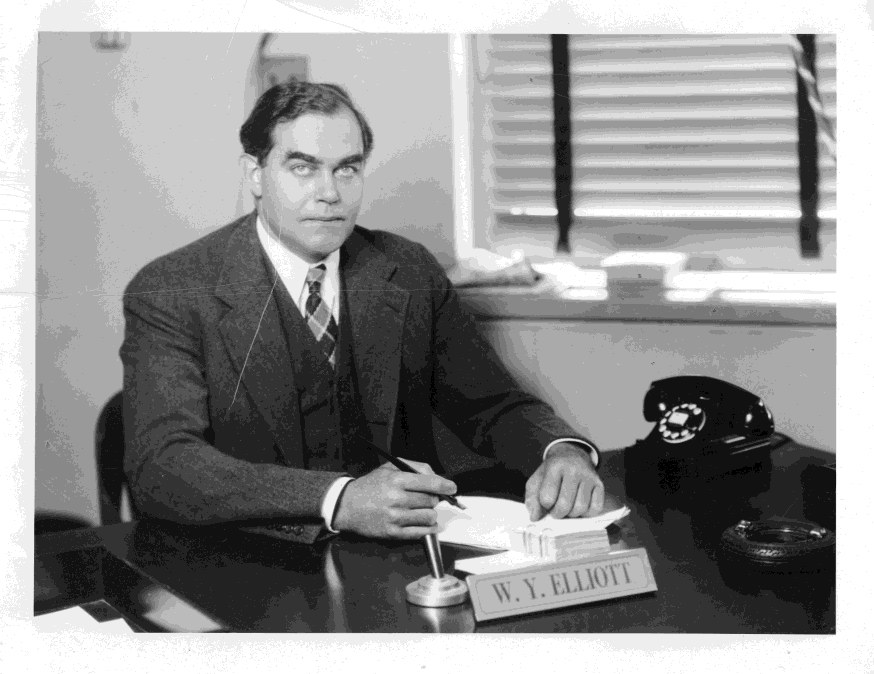
Elliott War Production Board 1944 – Elliott was Vice Chairman in Charge of Civilian Requirements of the War Production Board making decisions about the extent to which consumer goods could be diverted from war production. He was, in essence, the czar of the civilian economy in the last two years of the war.
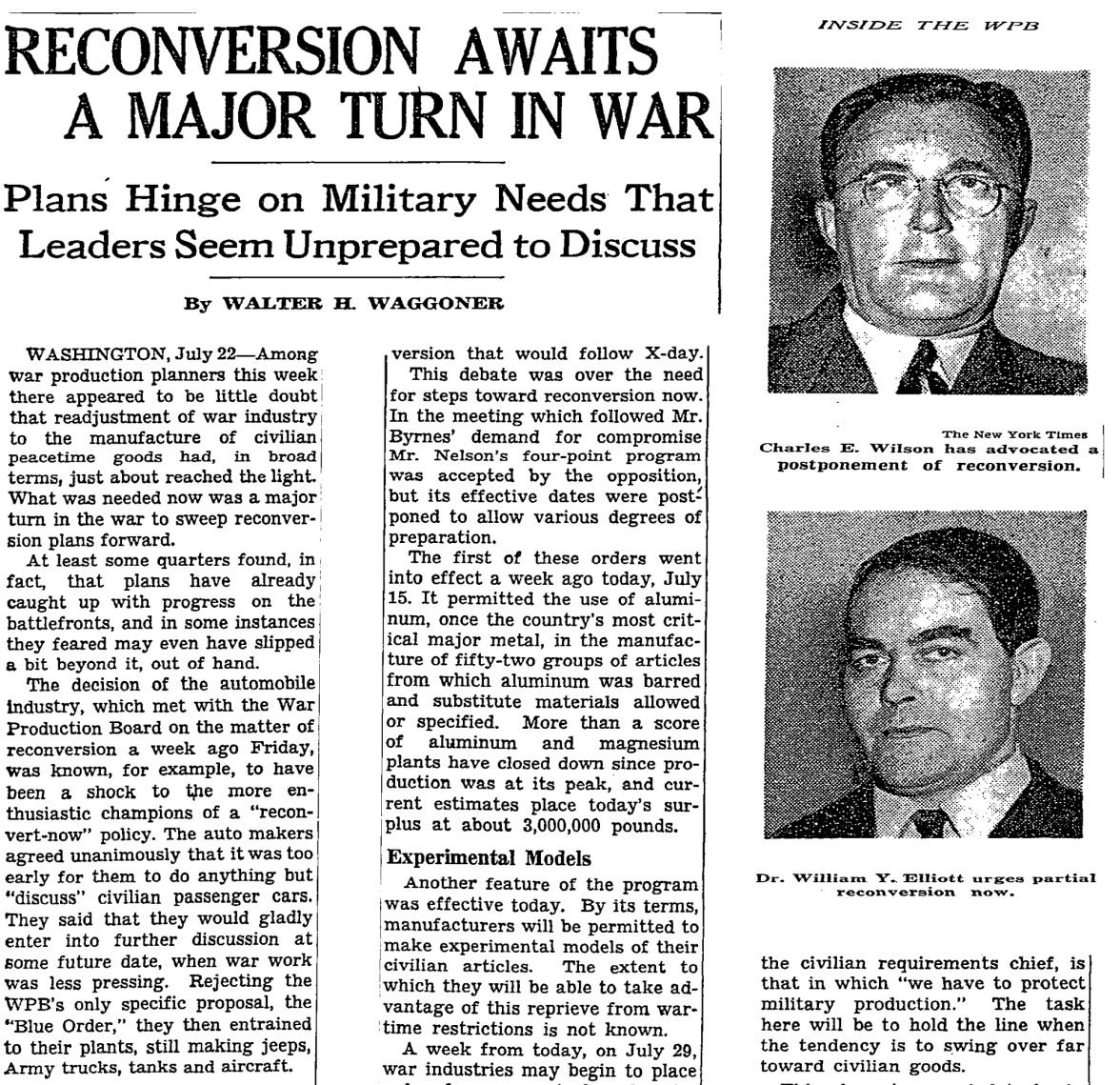
The biggest domestic debate in America in 1944 was when and to what extent the economy could start converting from military to civilian production. Elliott played a major role in this debate.
Although they advocated rival positions on reconversion during WWII, Charles E. Wilson, former CEO of General Electric, later became Elliott’s patron, and brought him to the Office of Defense Mobilization as Assistant to the Director during the Korean War.
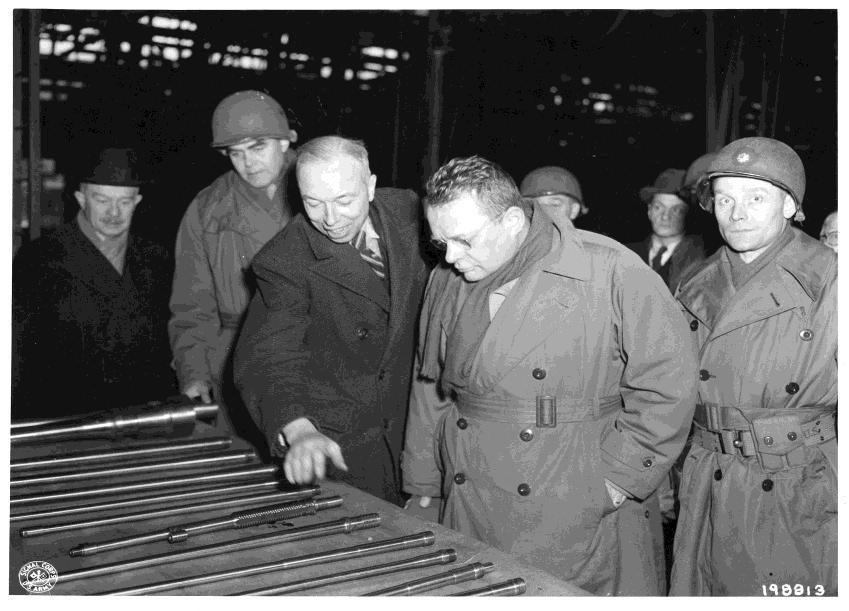
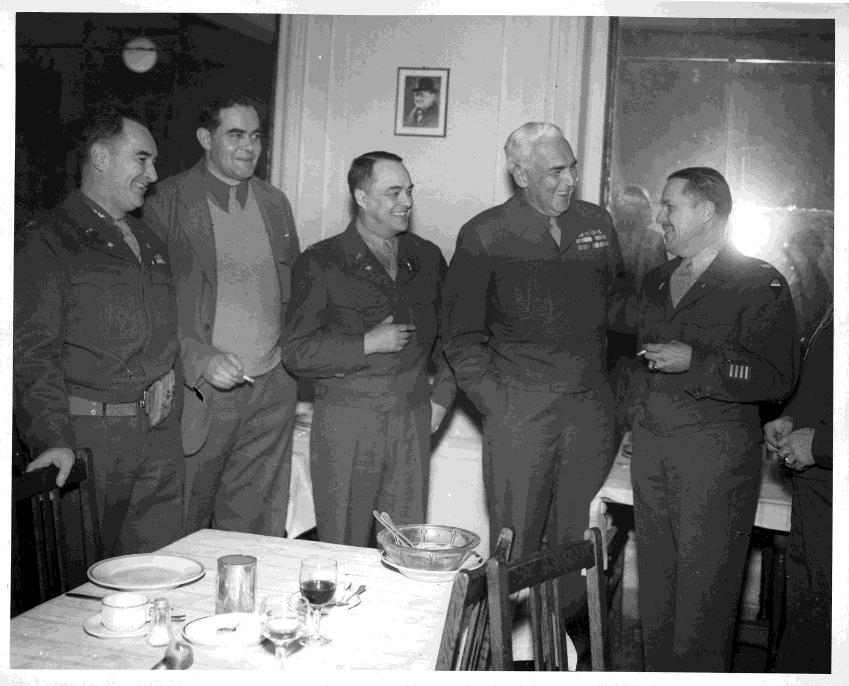
Elliott in delegation led by the head of the War Manpower Commission, Paul McNutt which travelled to Europe in December 1944-January 1945. Its mission was to examine what military progress was being made in Western Europe and what the implications were for projecting the rate at which manpower could be shifted to civilian purposes and how much relief from the burden of American expenditures in Europe could be had from reviving industrial production, particularly in France. The McNutt mission arrived in Europe just as the Battle of the Bulge was shattering optimistic expectations for a quick victory over Germany.
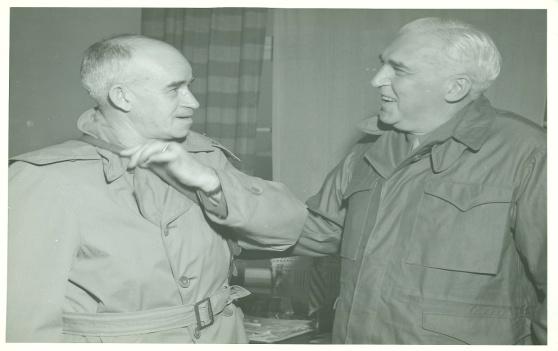
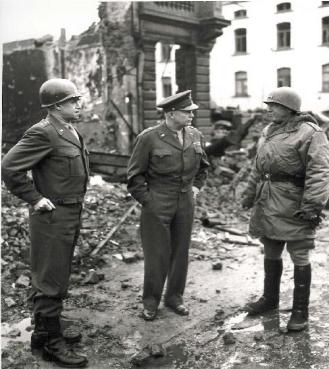
Elliott was not the only one on the trip who was not impressed by McNutt. The delegation had lunch at General Bradley's headquarters with General George Patton on January 7, 1945, as the siege of Bastogne and the German counter-offensive were still in progress. Patton's characterization of McNutt was characteristically blunt. "McNutt is a pompous fool not at all interested in manpower… He told me he knew all about war. I told him he knew nothing about it compared to the people fighting it, and that he and his Board [sic] were responsible for deaths of all Americans who gave their lives due to the shortage of replacements. I doubt if he loves me; it's mutual." During lunch he [Patton] "sat next to a Harvard professor [Elliott], who remarked that apparently I did not give a damn as to what people thought of me. I told him that depended upon who the people were, but that in any case I did not give very much of a damn."
1945
Surveying the ruins
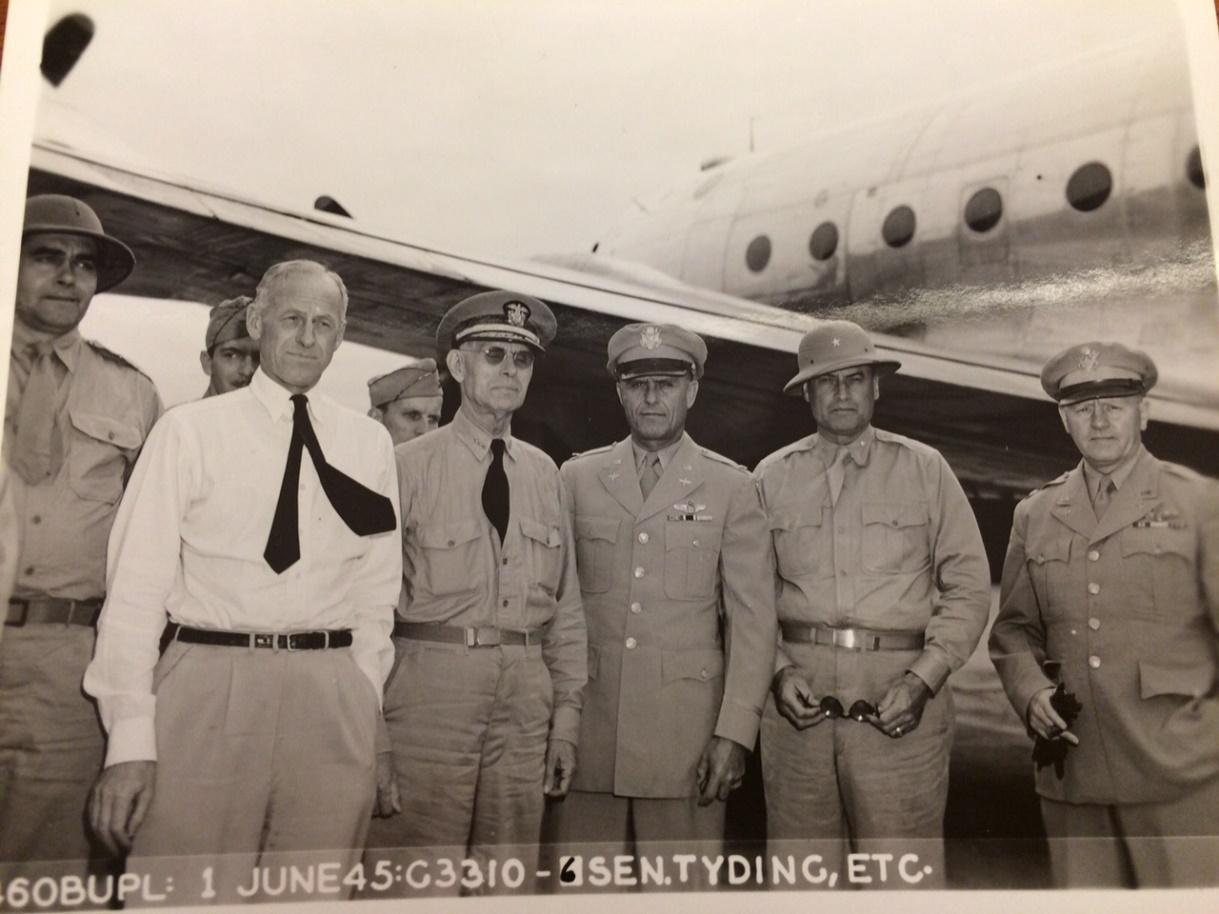
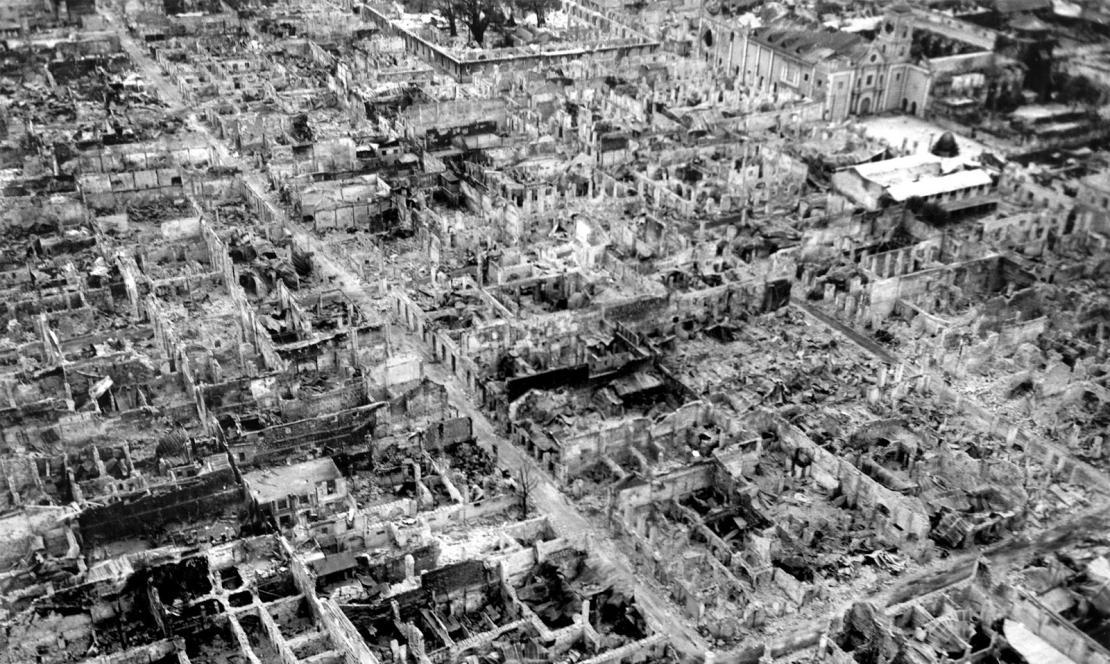
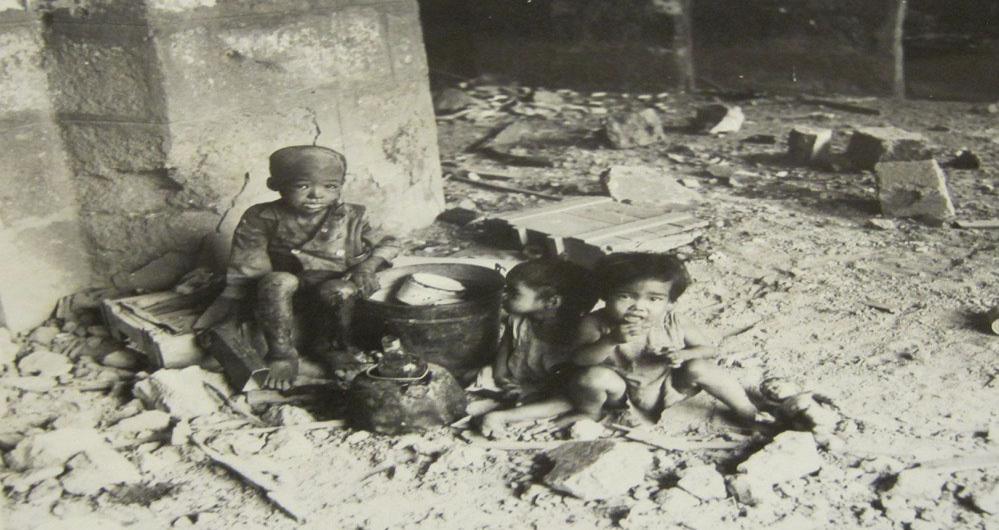
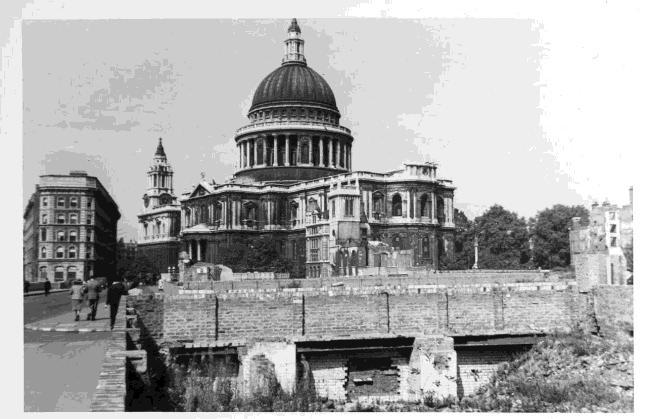
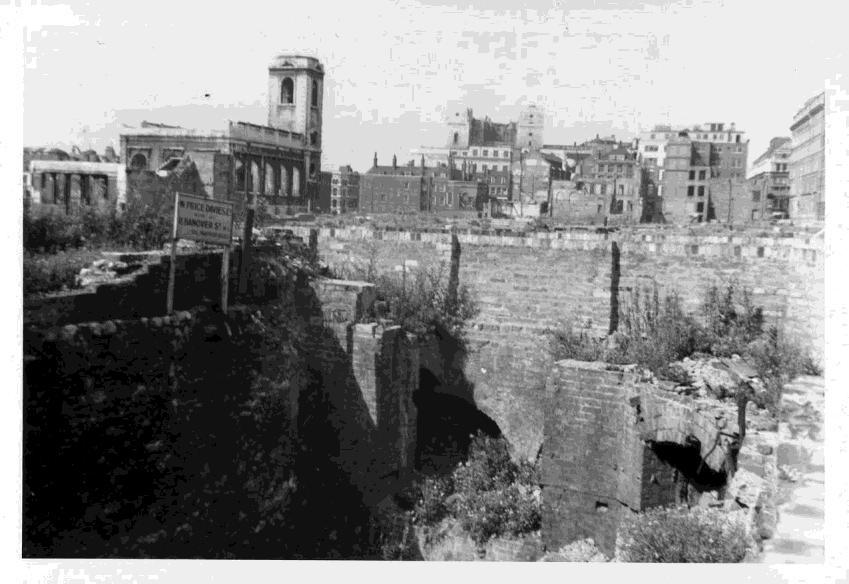
Elliott travelled to the Philippines with the mission led by Senator Millard Tydings in May and June 1945 to determine a date for Philippine Independence and assess the needs for U.S. assistance in aiding the war-ravaged Philippines.
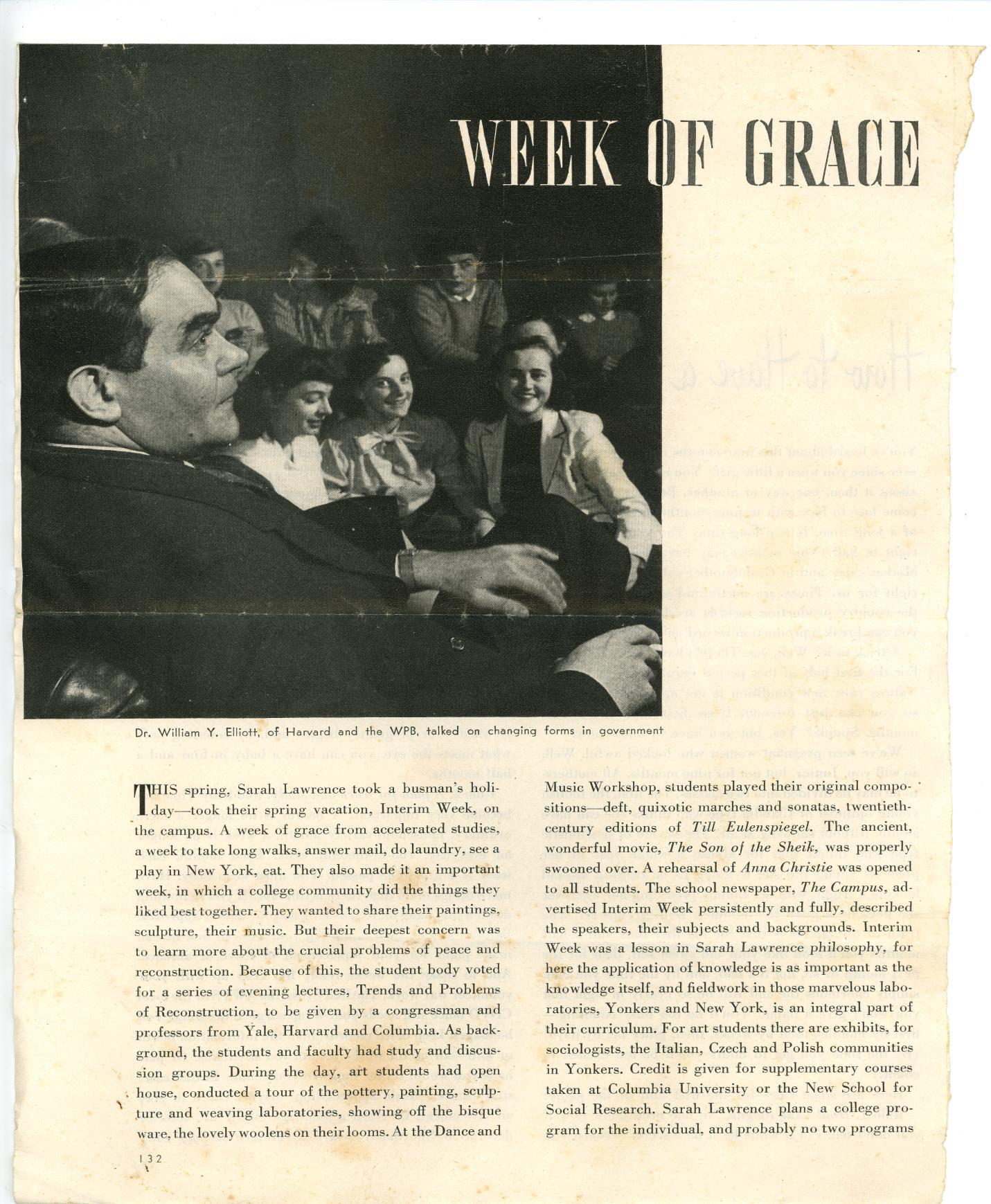
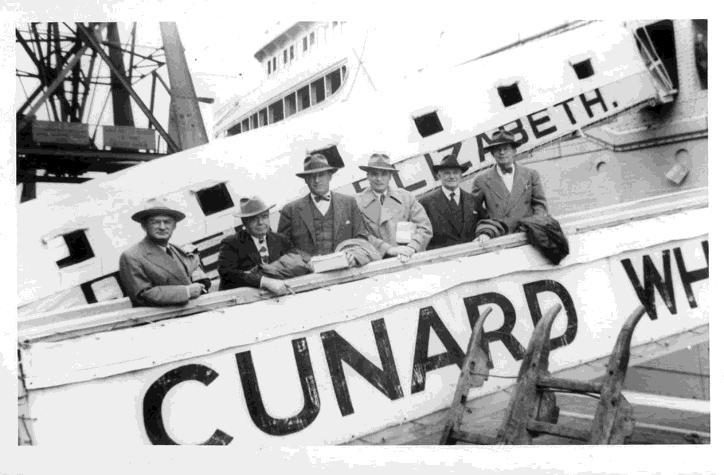
“Queen Elizabeth Departs With 300: Congressional Group Among Passengers on Big Liner's First Peacetime Trip,” New York Times, August 16, 1945
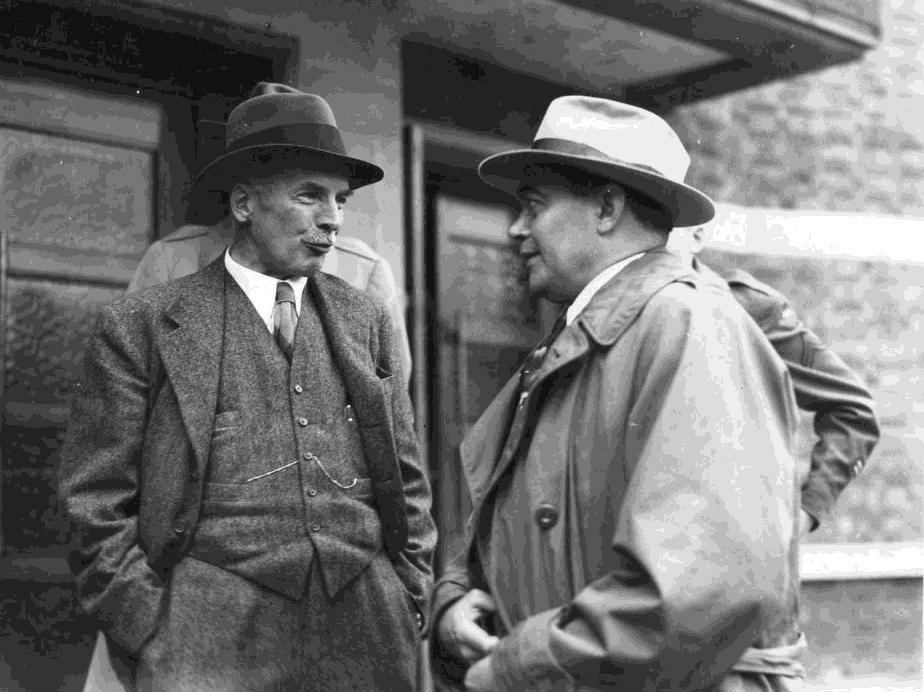
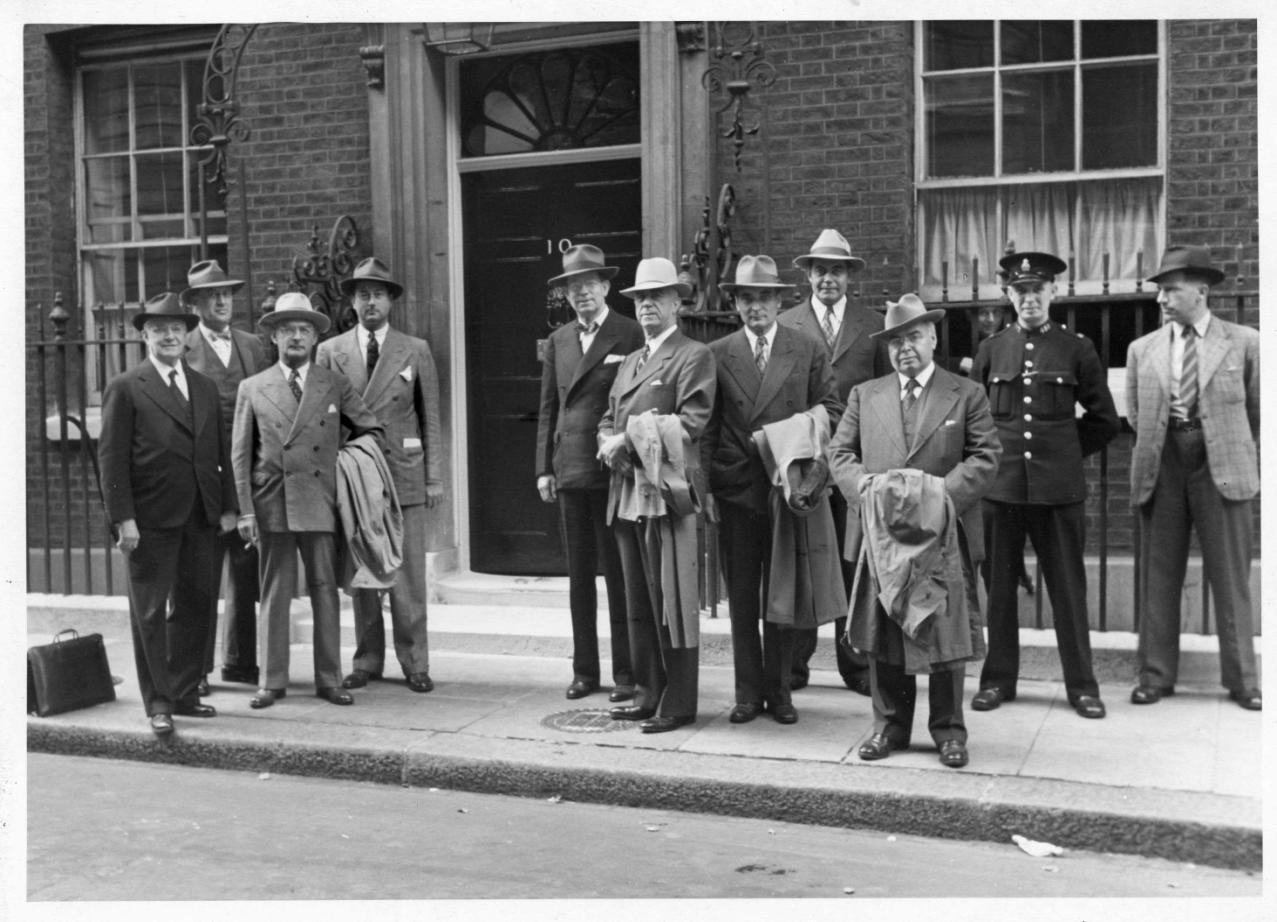
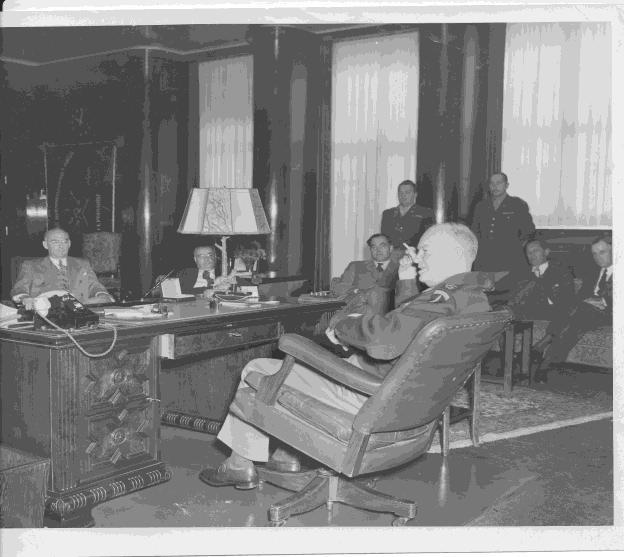
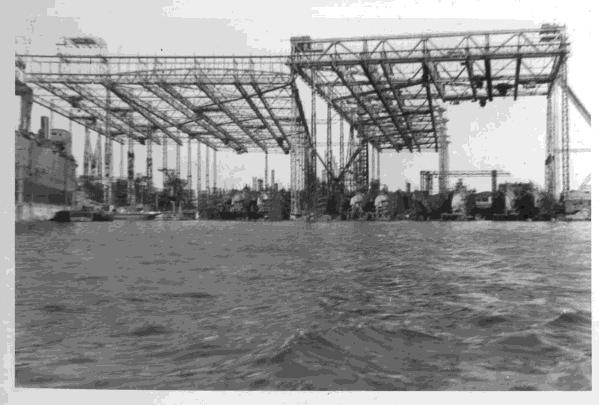
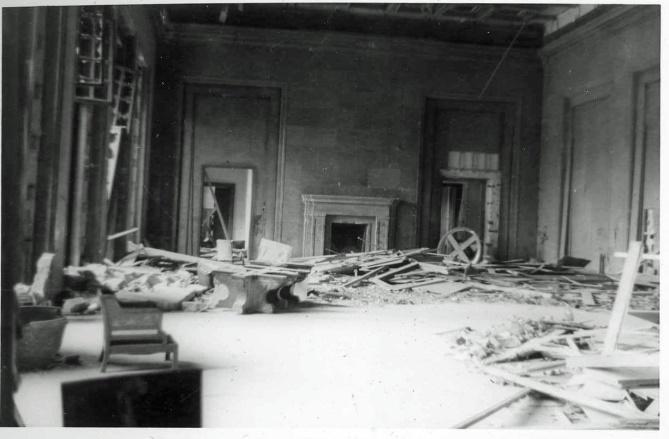
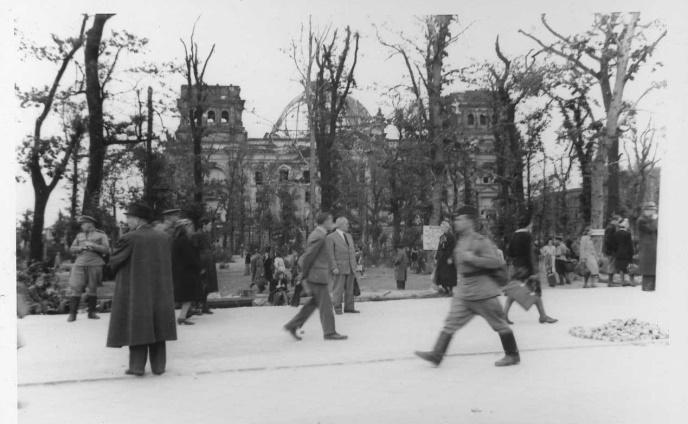
Elliott travels to Europe and the Soviet Union in August and September 1945 with the Congressional delegation led by Congressman William Colmer to determine the requirements for American postwar assistance to Europe. The Committee’s negative recommendation about continuing aid to Russia after meeting with Stalin was a milestone in the early Cold War.
September 1945
Colmer Committee Photo
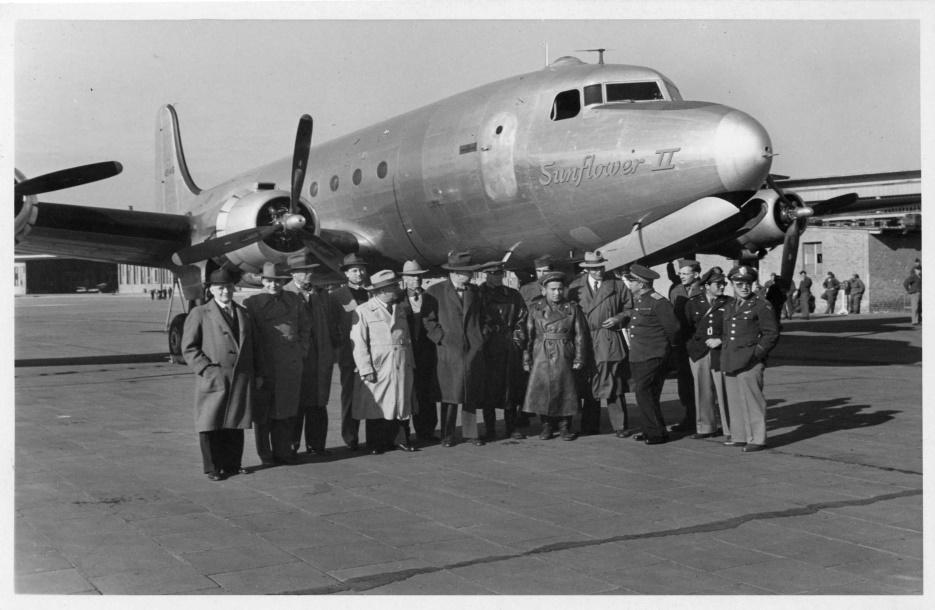
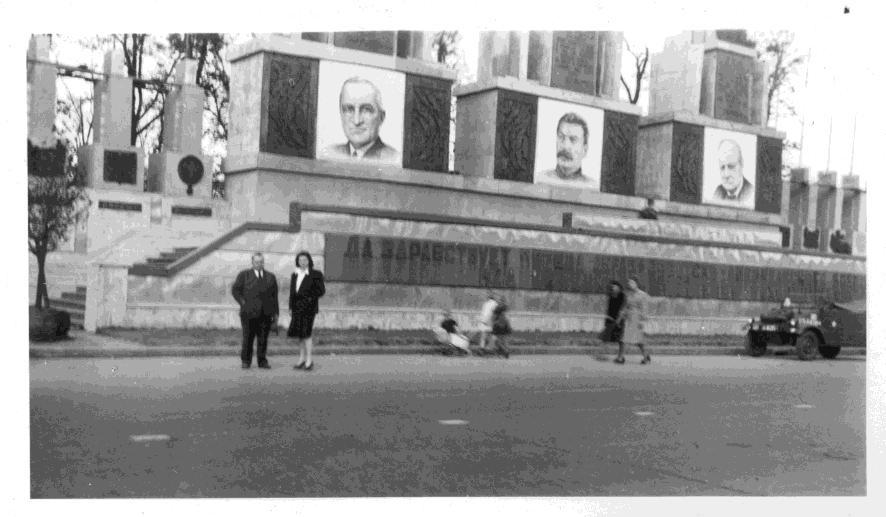
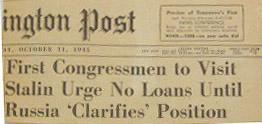
One of the opening salvos of the Cold War was the Colmer Commission’s recommendation to suspend aid to the Soviet Union until Stalin fully divulged Russia’s postwar reconstruction plans.
Despite the fact that it was the Soviet Union asking for favors - a six billion dollar loan and substantial grant assistance of locomotives and freight cars along with other goods - the Colmer delegation found their interlocutors unresponsive on key questions about the economy and was stalled by Russian officialdom in its efforts to set up a meeting with the Generalissimo. In a 1959 letter to Nixon at the time of an impending meeting between the Vice President and Soviet Premier Khrushchev, Elliott wrote
"I remind you that although at the time (in September 1945) it gave George Kennan ulcers and Averell Harriman would simply have nothing to do with it [Harriman was not in Moscow at this time], the tactics of ‘talking turkey’ to Stalin obviously made the most favorable dent on him and forced the revelation of his true intentions. This happened in the interviews which I set up and stage managed for the Colmer Committee on Post War Economic Policy and Planning... If we had not walked out … of a top flight conference with a Politburo member, we would never have had the opportunity to explore these matters with Stalin. If we had not asked questions which even George Kennan regarded as ‘insulting’ and ‘diplomatically impossible’ Stalin would have given us the same ‘brush-off’ and the insults which he gave to the British Parliamentarians who tried to butter him up.”
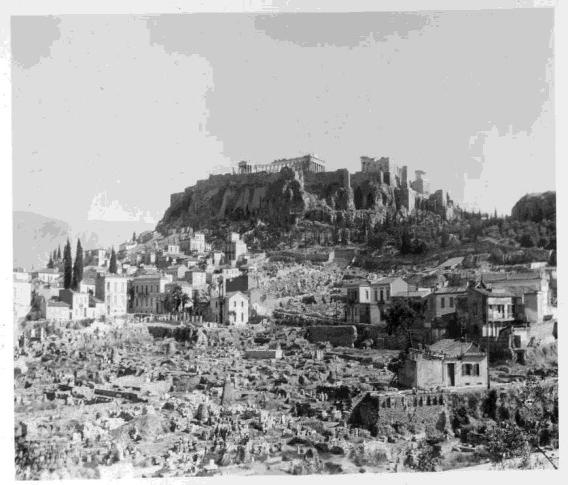
Colmer Committee photo
1947–49
Congress and the Marshall Plan
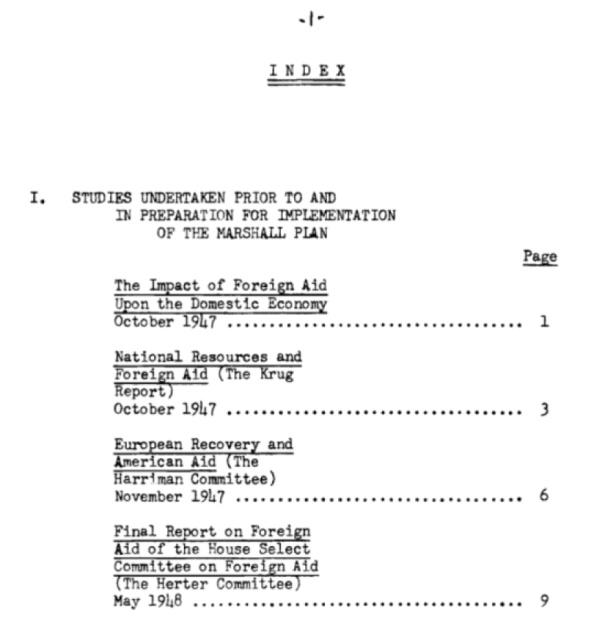
It is remarkable that the committee that initiated the funding for the foreign policy of the United States had never had a professional staff director until 1947, but this was the job that Elliott was brought in to do, just at the time President Truman initiated the two landmark foreign policy initiatives of the early Cold War, and challenged Congress to come up with funding and political support. The House Committee on Foreign Affairs "moved to correct its staffing deficiencies by hiring professional help as authorized by Congress in the reorganization act of 1946. Four men were selected, after careful screening, to compose the professional staff. All of them had extensive staff experience. One of them, William Y. Elliott, a professor of government at Harvard and a senior expert on the staff of the Legislative Reference Service of the Library of Congress, was designated as the staff director."
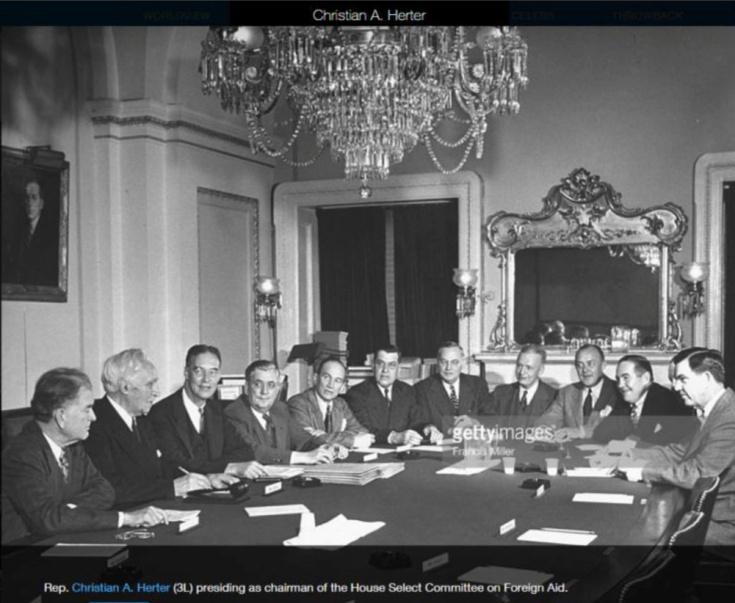
Elliott was Staff Director of the Herter Committee of the House of Representatives, whose work was instrumental in financing the Marshall Plan aid to reconstruct Europe.
A study of the politics of the House Foreign Affairs Committee during the 80th Congress notes that some committee members felt that Elliott as staff director, and some consultants that he had hired had divided loyalties, since Elliott was also the staff director for the House Select Committee on Foreign Aid (Herter Committee).
Some executive branch officials, especially in the State Department, felt that the staff under Elliott was too activist and "behaved like a rival bureaucracy." As this study points out, in part this was inherent in a situation where the Congress was controlled by another party, which demanded independent judgments on key policy questions.
While Elliott had a direct input into the recommendations of Colmer Committee, and was the principal drafter of most of the published reports of that body, his work with the Herter Committee was more in terms of laying out and monitoring assignments, though he was also closely involved in drafting the Herter committee's reports.
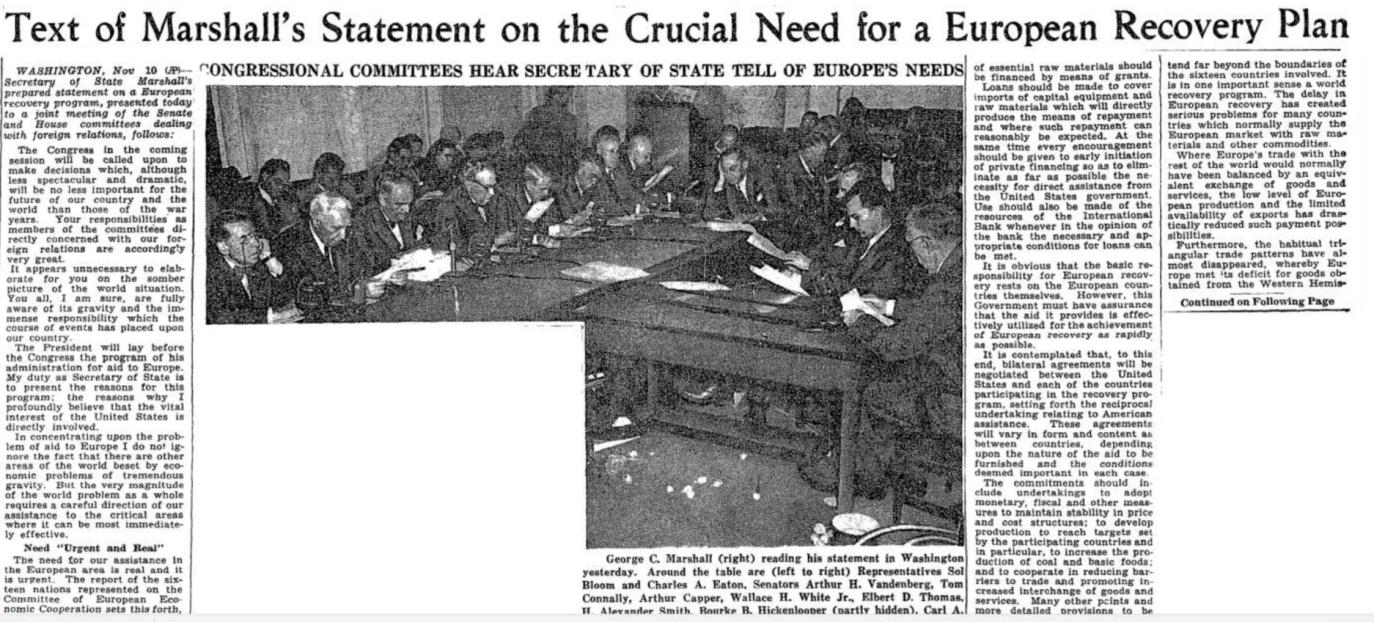
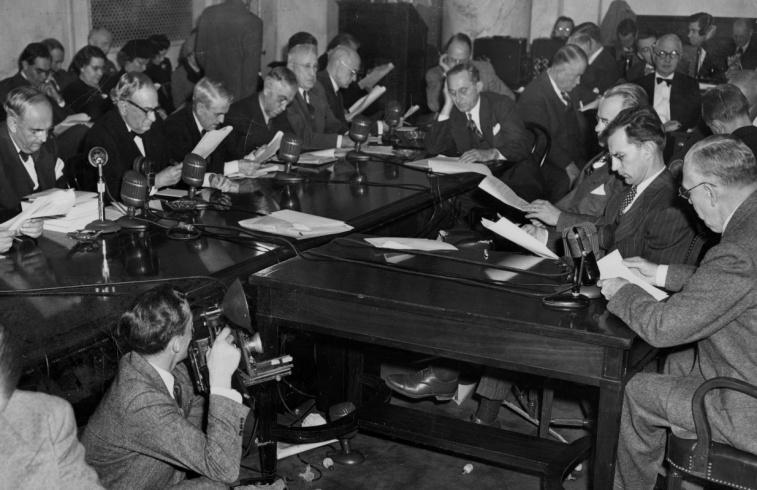
With the Marshall Plan and European Recovery legislation completed and a new leadership in the House Foreign Affairs Committee, the Herter Committee dissolved and Elliott resigned in January 1949 as staff director of the House Foreign Affairs Committee, bringing his career in Congress to an end. He had hit a unique political window in 1945-48 where Congress became a key player in the foreign affairs decisions of the early postwar period. In large part this was because most of the pressing issues involved money - relief, reconstruction - or Congressional endorsement of ventures like the Truman Doctrine and the trade negotiations. The House of Representatives, which had been a backwater in the area of foreign policy in the previous period, emerged as a prominent and indispensable element of postwar foreign policy. Elliott contributed significantly to this.
1949–59
The Cold War, the CIA and Harvard
Following a two year interlude in the Legislative branch, Elliott returned to the Executive branch as the Cold War was reaching a new stage of intensity. Elliott's Washington work following his resignation as Staff Director of the House Foreign Affairs Committee in January 1949 appears to have been largely free lance, such as consulting on a Hoover Commission report on government organization. He completed a lengthy study on the projected future of mobilization for war for the next decade for the Congressional Reference Service.
In a letter to William Jackson, Deputy Director of the CIA on October 11, 1950, Elliott described his recent activities, which covered the period 1949-50: “I have made several efforts to get in touch with you during my visits to Washington, where I am serving as an occasional consultant to Frank Wisner and writing staff studies from time to time for the Legislative Reference Service of the Library of Congress and memoranda for the State Department.” In a comment that suggests that Elliott felt that his work for Wisner may not have been significant enough to come to the attention of the Deputy Director of the CIA, Elliott added “If you need any further information about what I have been doing for the CIA, I am sure Frank Wisner would be glad to give it to you, or you could check with Paul Nitze of the Policy Planning Staff of the State Department, or with Jim Lay of the NSC.”
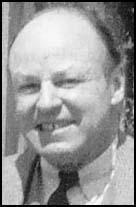
Elliott signed a “personal services contract” with the CIA on March 23, 1949 for three months, and then an extension of the contract in June 1949 which was extended to cover the rest of the calendar year. Although he had an office in the CIA, his status was consultant. A study of CIA Cold War ties to the universities asserts that “on October 3, 1949, the CIA requested that the FBI investigate him in connection with a position for which he was being considered. He was in due course appointed to that position – consultant to Frank Wisner, deputy CIA director for plans (secret operations)...”
Frank Wisner was the creator of the operational or clandestine side of the CIA in the late 1940s. Wisner had been told to create an organization that concentrated on "propaganda, economic warfare; preventive direct action, including sabotage, anti-sabotage, demolition and evacuation measures; subversion against hostile states, including assistance to underground resistance groups, and support of indigenous anti-Communist elements in threatened countries of the free world". Wisner moved to Washington where he associated with a group of journalists, politicians and government officials that became known as the Georgetown Set. This included George Kennan, Dean Acheson, Richard Bissell, Desmond FitzGerald, Joseph Alsop, Stewart Alsop, Tracy Barnes, Thomas Braden, Philip Graham, David Bruce, Clark Clifford, Walt Rostow, Eugene Rostow, Chip Bohlen, Cord Meyer, James Angleton, William Averell Harriman, John McCloy, Felix Frankfurter, John Sherman Cooper, James Reston, Allen W. Dulles and Paul Nitze. Most men brought their wives to these gatherings. Members of what was later called the Georgetown Ladies' Social Club included Katharine Graham, Mary Pinchot Meyer, Sally Reston, Polly Wisner, Joan Braden, Lorraine Cooper, Evangeline Bruce, Avis Bohlen, Janet Barnes, Tish Alsop, Cynthia Helms, Marietta FitzGerald, Phyllis Nitze and Annie Bissell.
Frances Stonor Saunders, the author of Who Paid the Piper? The CIA and the Cultural Cold War (1999) has pointed out:
"In long exchanges, heated by intellectual passion and alcohol, their vision of a new world order began to take shape. Internationalist, abrasive, competitive, these men had an unshakeable belief in their value system, and in their duty to offer it to others. They were the patricians of the modern age, the paladins of democracy, and saw no contradiction in that. This was the elite which ran American foreign policy and shaped legislation at home. Through think-tanks to foundations, directorates to membership of gentlemen's clubs, these mandarins were interlocked by their institutional affiliations and by a shared belief in their own superiority."
Although he was not a member of “the Georgetown Set,” Elliott’s own personal influence network overlapped with it: including Kennan, Acheson, Bissell, Rostow, McCloy, Frankfurter, Reston, Allen Dulles, and Paul Nitze.
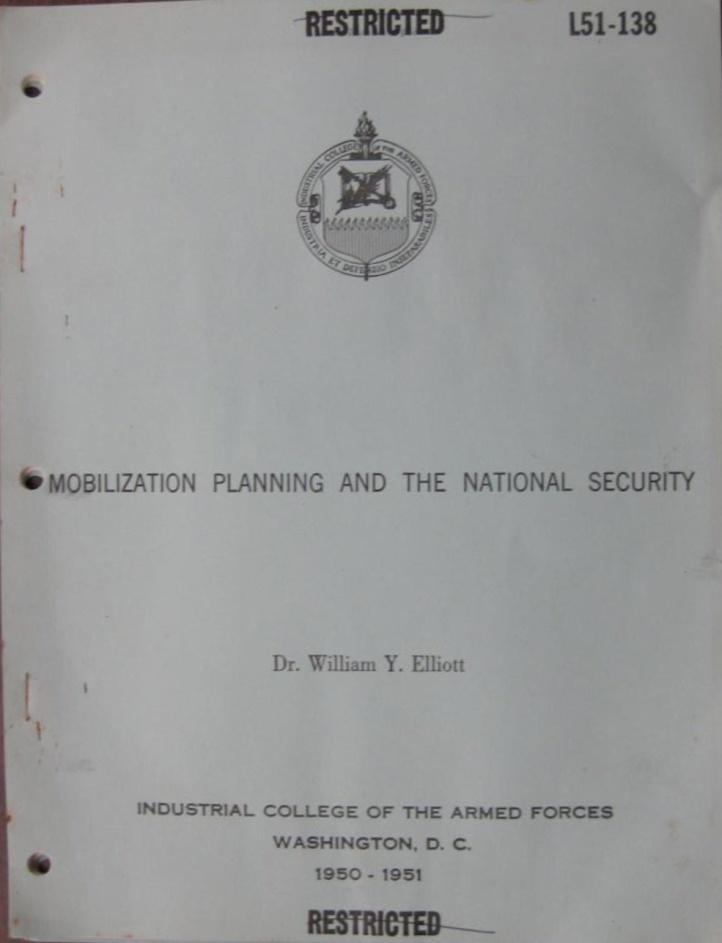
Elliott’s consulting work with the CIA was mainly focused on psychological operations directed against the Soviet Union in Eastern Europe. The transition from wartime mobilization to foreign aid to prop up vulnerable allies to psychological warfare to confront the Soviet threat and contest for influence in the postwar world is illustrated by the 1950 study that Elliott did under the auspices of the Legislative Reference Service titled “Mobilization Planning and the National Security.” In addition to dealing with the familiar themes of resources and stockpiling for the contingency of hot war, this study had a significant section on psychological warfare, and explained how it related to Elliott’s previous concerns about mobilization and foreign assistance.
Wisner’s efforts at psychological warfare ranged from direct support of opposition groups behind the Iron Curtain to the support of a range of cultural organizations which, it was hoped would project American influence into Europe and the Communist Bloc countries, and liberalizing the societies there and therefore undermine Communist rule. Frank Wisner coined the term “The Mighty Wurlitzer” to describe the network of small organizations and magazines that the agency used to propagate its message during the Cold War. These efforts did not end well, culminating in exposure of CIA supported cultural and educational front groups in the 1960s, and the crushing of resistance movements in Eastern Europe in the mid-1950s.
One more lasting offshoot of the concern for cultural initiatives in the Cold War, was the Harvard International Seminar, created in 1952 by Elliott with foundation funds, and with the considerable assistance of his most notable student, Henry Kissinger.
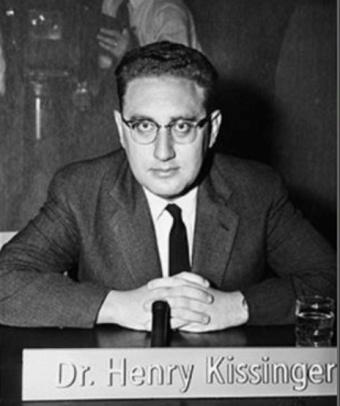
Although the Harvard International Seminar is often assumed to be the creation of Henry Kissinger, who was certainly the main organizer of this institution during the 1950s, the vision and original impetus came from Elliott, who also obtained the necessary resources.
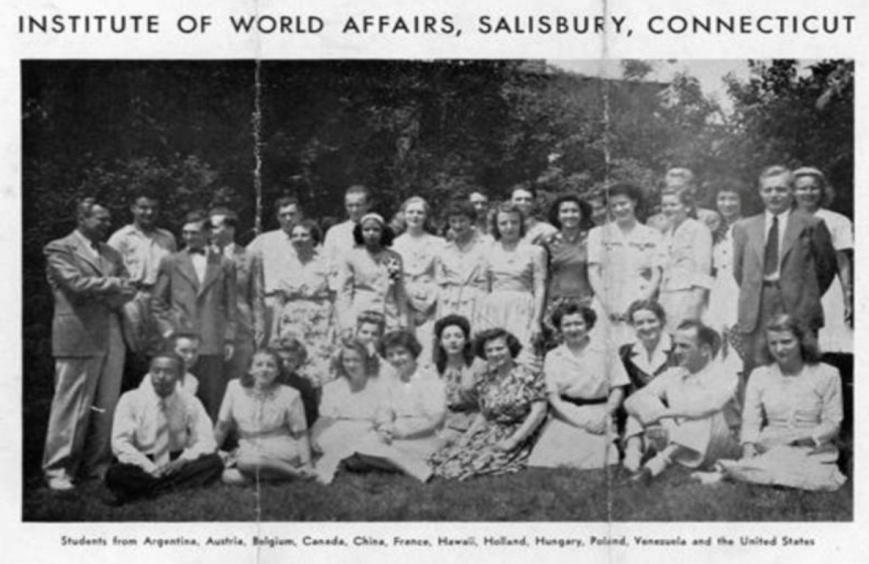
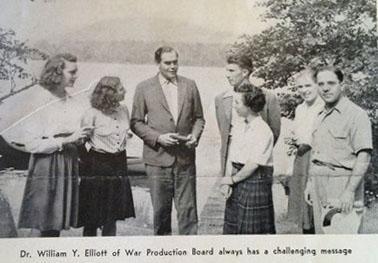
Elliott had been involved in the Geneva-based Institute of World Affairs since the 1930s. As a consequence of World War II, the headquarters was moved to New York City. The financial backing came largely from a wealthy Palm Beach society couple, Alexander and Maude Hadden. Starting in 1941, Elliott visited the summer institute at Twin Lakes in Salisbury Connecticut annually, and in the postwar period was the director of the World Affairs Institute at Twin Lakes during its summer sessions, until he took on the directorship of the Harvard Summer School in 1950.
Stephen Graubard, an assistant to Elliott who had first hand knowledge of this period, wrote:
In founding the International Seminar, William Elliott and Henry Kissinger sought to make some contribution toward changing this. Elliott's position as Director of the Harvard Summer School made the experiment possible; Kissinger's personal involvement gave form and substance to the idea. Their plan was a rather modest one: to invite to the United States a number of young foreigners, no longer students, already embarked on their professional careers, who were prepared to come to Harvard for a summer. … The experiment was launched so late in the spring of 1951 that virtually all members in the first year were Europeans who had already come to the United States on their own. In subsequent years, participants were chosen specifically for the Seminar, and efforts were made to extend the search for suitable candidates to countries outside Europe.
Yasuhiro Nakasone and Pierre Elliott Trudeau were two of the most notable graduates of the Seminar.
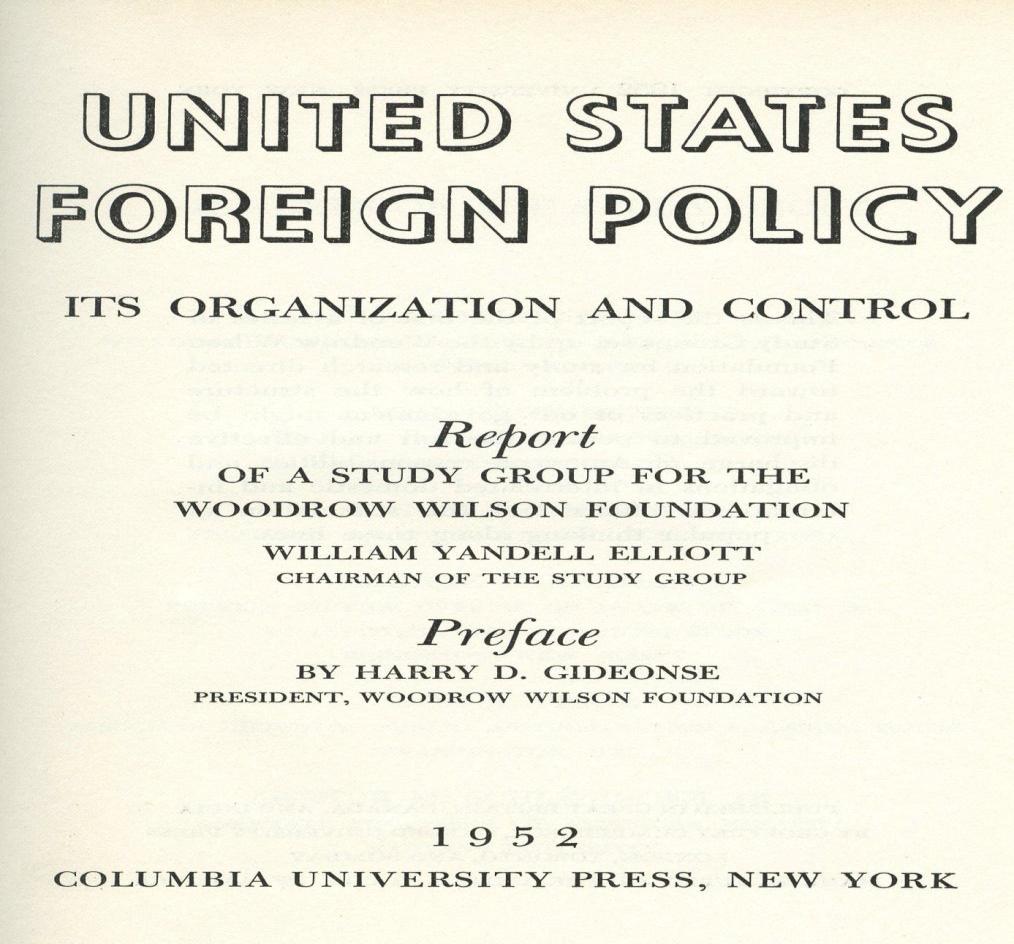
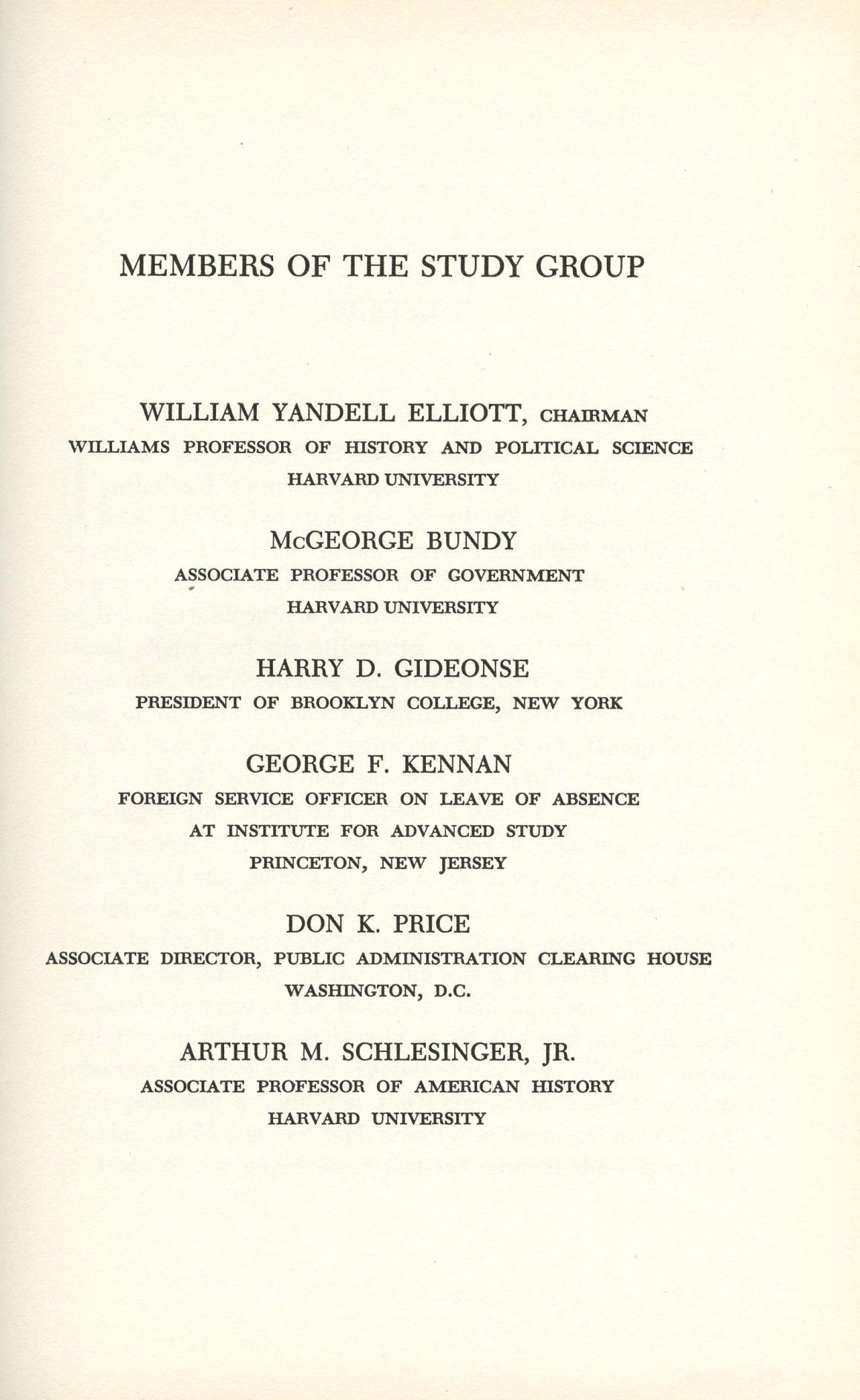
In the early 1950s Elliott directed a study of United States Foreign Policy for the Woodrow Wilson Foundation. Among his co-authors were George Kennan, McGeorge Bundy, and Arthur Schlesinger, Jr.
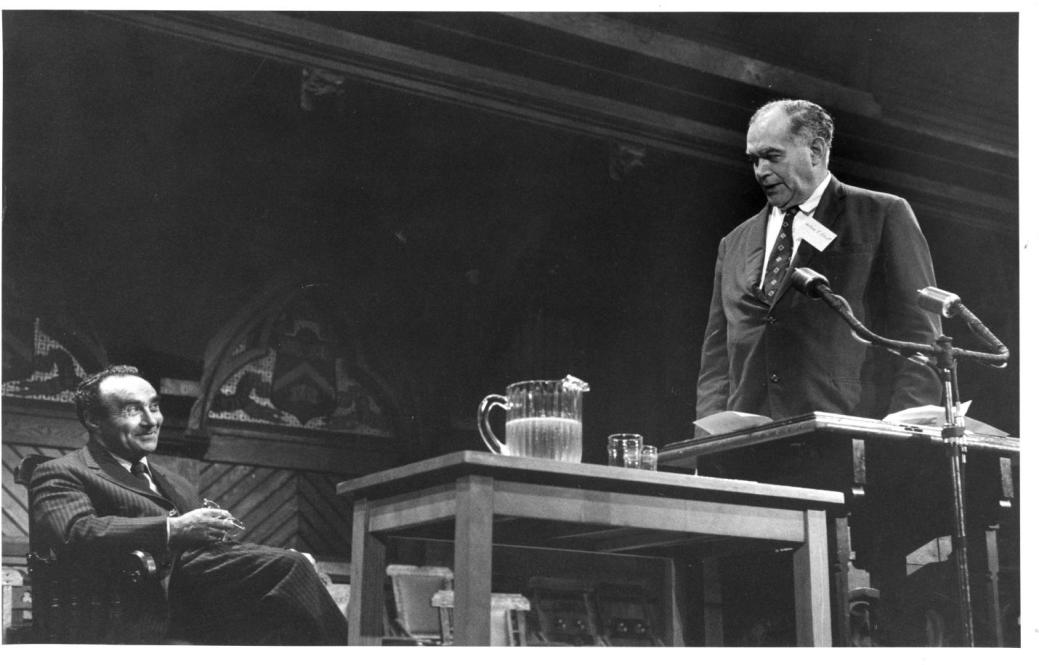
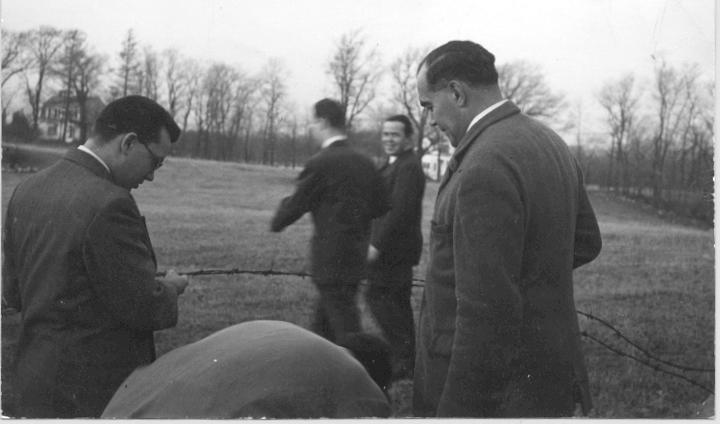
From 1950 to 1959 Elliott was the director of the Harvard Summer School. In addition to supervising the International Seminar, he personally organized several conferences each summer on poetry, philosophy and science, as well as international affairs.
1950–60
Eisenhower’s NSC and Nixon
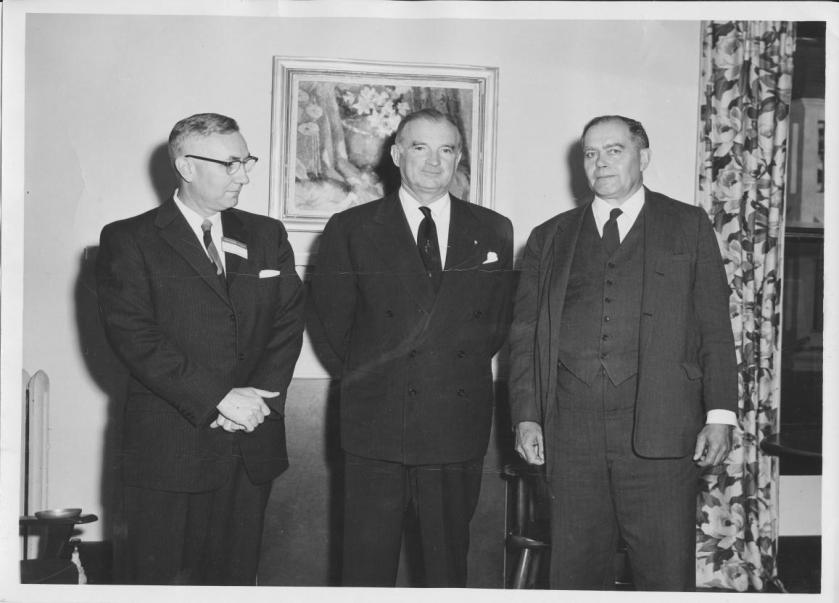
Senator Symington was a major figure in the Korean War era mobilization.
A 1950 Life Magazine cover article quoted Truman confidant Clark Clifford as saying “There are three big jobs in the government now, besides the President’s. They are Acheson’s [Secretary of State], Marshall’s [Secretary of Defense] and Symington’s.”
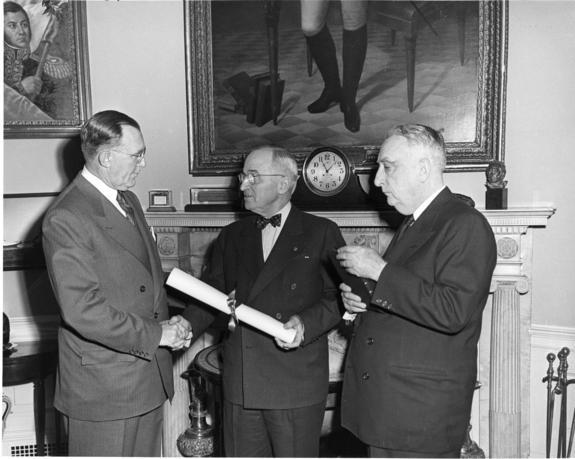
President Harry S. Truman (center) with Charles E. Wilson (left), formerly President of the General Electric Company, preparing to take the oath of office as Director of the Office of Defense Mobilization, as Chief Justice Fred Vinson (right) prepares to administer the oath in the Oval Office.
Date: December 21, 1950.
Charles E. Wilson, with whom he had clashed during World War II on the issue of preparing for reconversion to a civilian economy invited Elliott to join him as his personal advisor in the newly-formed Office of Defense Mobilization. This position eventually brought Elliott onto the staff of the Eisenhower National Security Council.
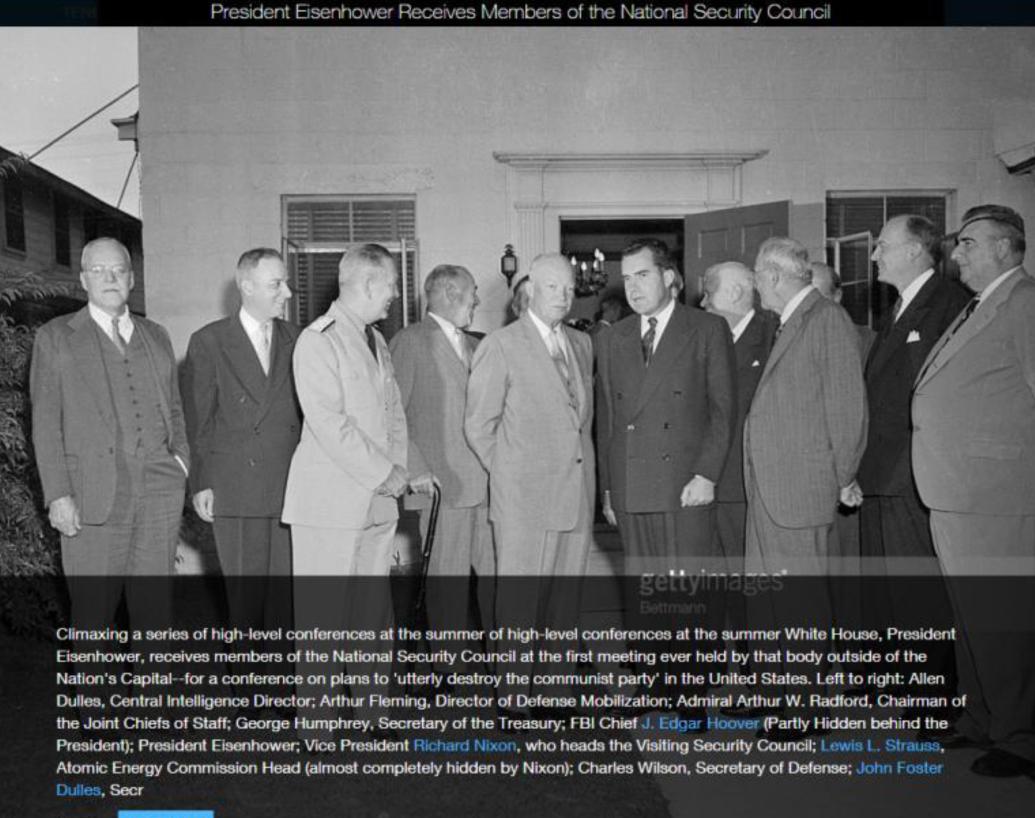
After Wilson resigned as head of ODM in March 1952, Elliott’s boss at the Office of Defense Mobilization was Arthur Flemming (second from left). Elliott was Flemming’s designated representative to the Planning Board of the NSC from 1953-57 and often sat in on plenary NSC meetings in Flemming’s absence “two seats down from Eisenhower.”
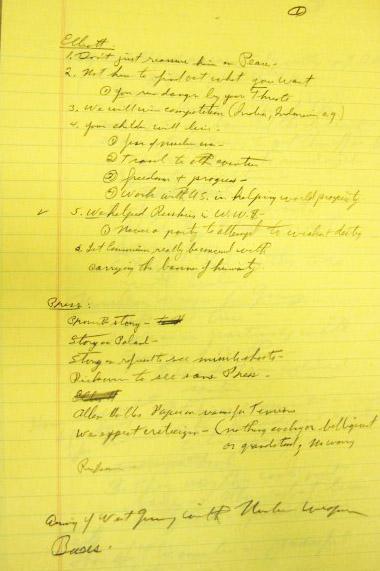
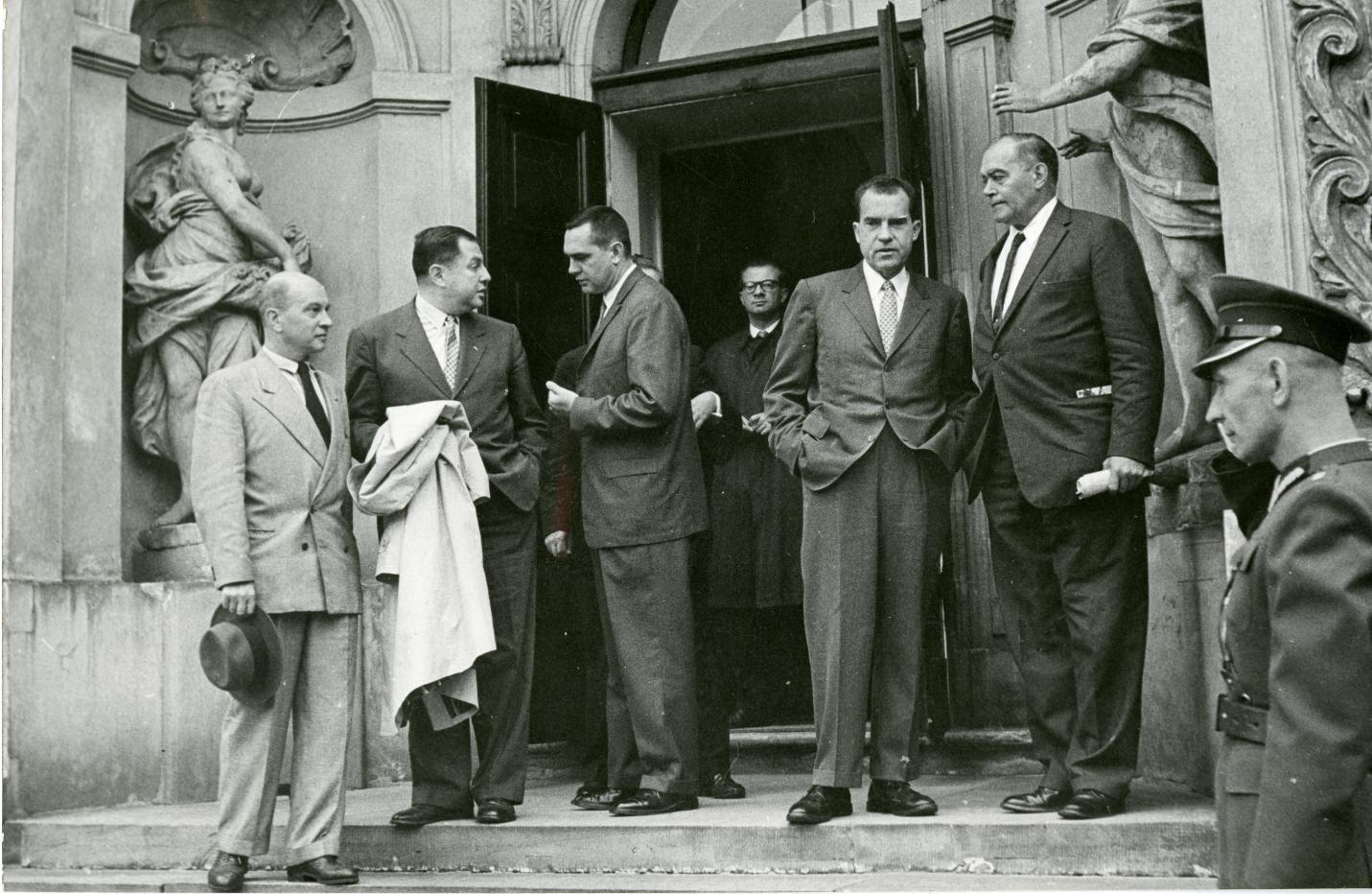
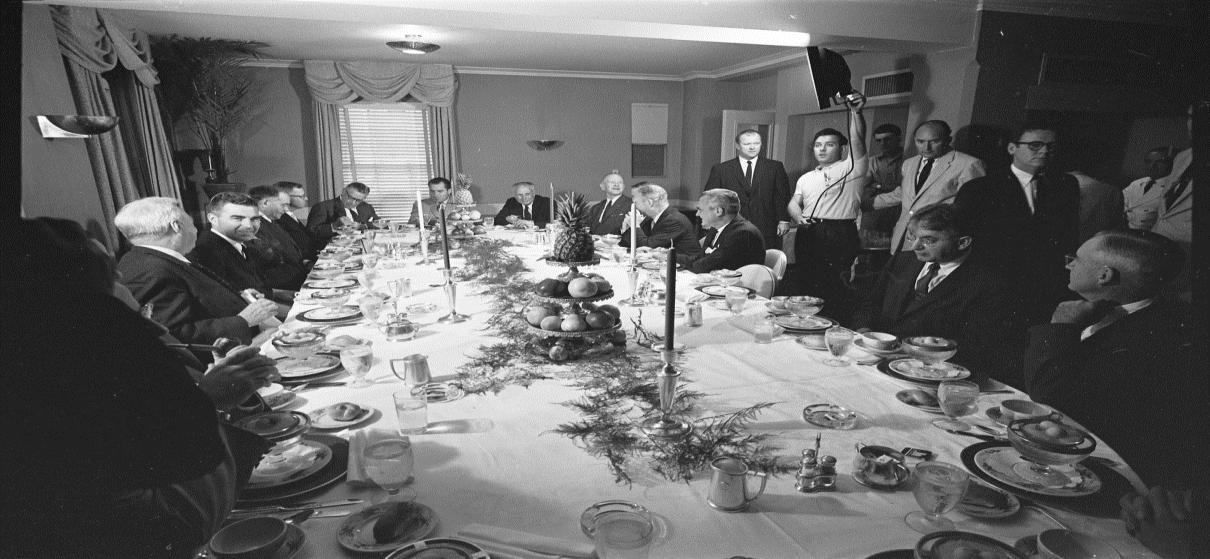
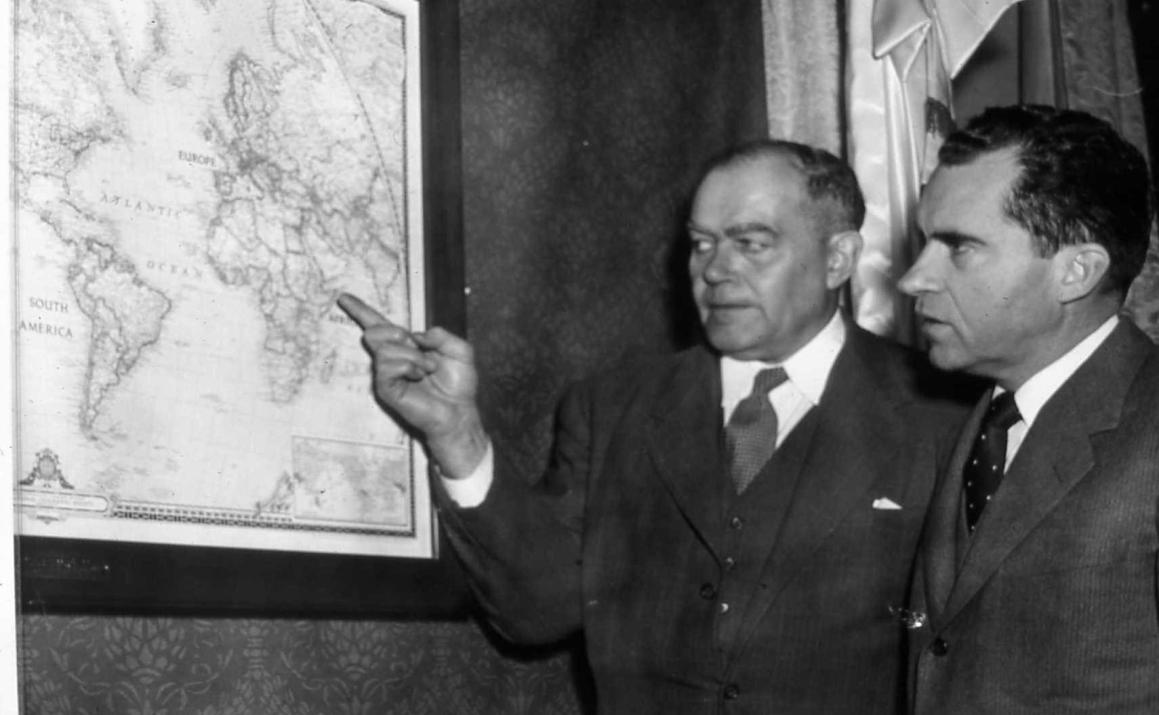
Elliott traveled to the Soviet Union with Nixon as advisor and speechwriter in 1959. This is a page of Nixon’s notes on Elliott’s suggestions for his major speech in the Soviet Union on Nixon’s favorite medium – the yellow legal pad.
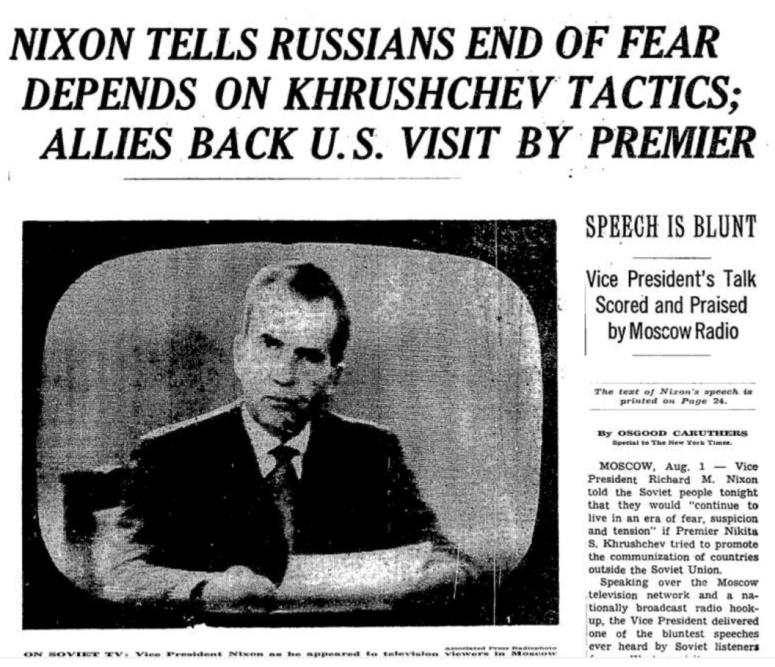
On Monday, July 27, 1959, Nixon sent a request for speech ideas to Elliott via Marine Brigadier General Robert Cushman, his special assistant for national security affairs who was also serving as a de facto chief of staff for the Vice Presidential trip. “As you know,” wrote Cushman, “RN would appreciate your drafting a page or two for his speech Saturday [August 1, 1959, the day Nixon would arrive in the Soviet Union] of ideas along this theme: ‘Everywhere I go, the Russian people say peace and friendship. I would like to show you what our President has done in this field that some of you may not be aware of.’”
Nixon Library: Source: Evans Studio, 1215 P St, Lincoln, Nebraska March 10, 1960
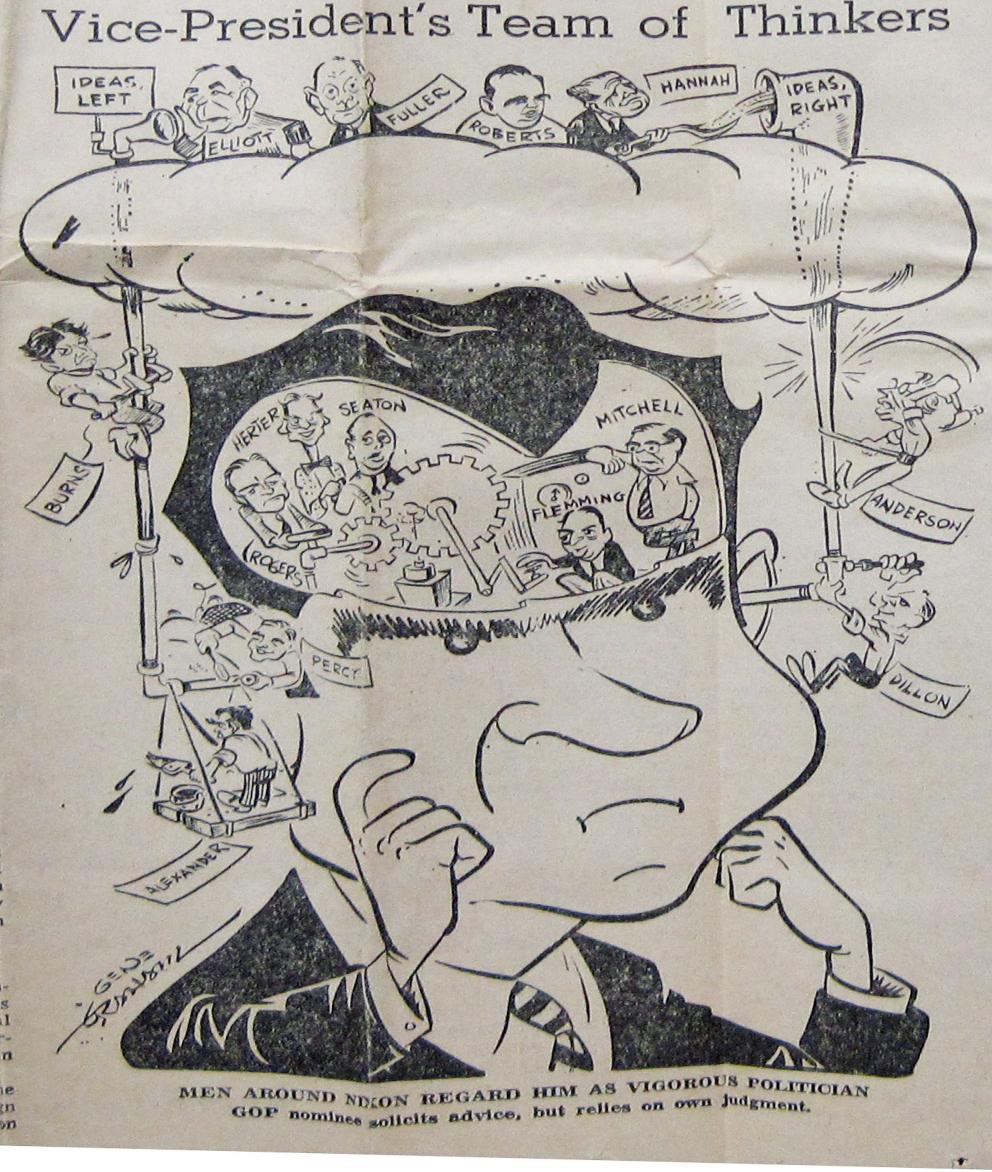
Toward the end of the 1960 campaign Elliott resigned in frustration with being frozen out of the Nixon circle by the Vice President’s political advisors. In a 1961 letter to Nixon in response to Nixon’s apparent overture to resume the advisory relationship Elliott voiced his frustrations about the way the 1960 campaign was handled, and pointedly noted that he himself had landed on his feet, continuing his work with the State Department, now as an advisor to Dean Rusk.
“Dear Dick: I have just come back from a two-weeks trip through Chicago and the Middle West. At the present time I am operating under such pressures, with theses and examinations, that I really cannot give the thought that would be needed. I might say, in all frankness too, that the efforts that I made during the campaign to be of help to you were, on the whole, so fruitless that I am not certain that my thinking and yours were in agreement, and I was certainly put in a position where I was really reporting to [James] Shepley and being shunted aside by him and [Robert] Finch and [Herbert] Klein.”
1961–69
Kennedy, Rusk and Johnson
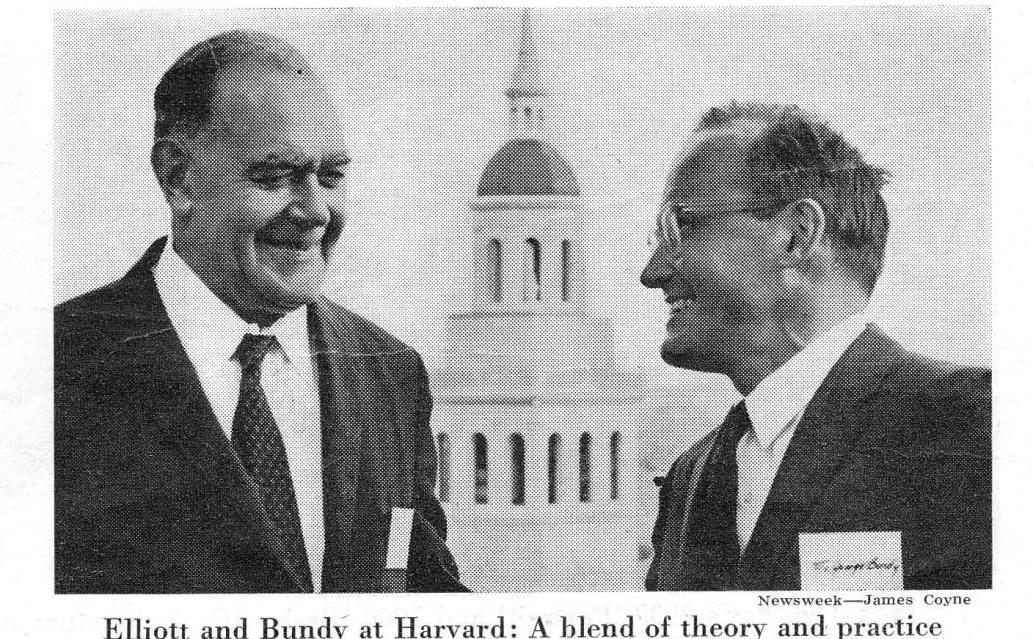
Elliott later recalled that “When I retired at Harvard I got a great many congratulatory telegrams from former students, including John F. Kennedy, who said kind words about me in the course of his telegram as he had previously done in other letters and things of that sort, but he said he was grateful that my advice had not always been accepted by the American people at full value. Since I had advised Nixon, and had written some of his speeches and helped in the early part of his campaign (I gave up a little bit later on in the effort), and on his trip to Russia, you can understand the wit behind that statement.”
Following the 1960 Presidential election, Elliott had a significant influence on JFK’s selection of Dean Rusk as Secretary of State, which had momentous consequences for the foreign policy of the Kennedy and Johnson administrations, especially with regard to Vietnam. In the insider account of the Kennedy administration by journalists Edward Weintal and Charles Bartlett the story of Kennedy’s selection of Rusk is recounted, noting that Elliott’s strong recommendation of Rusk, passed on through Kennedy’s transition aide Fred Holborn, reinforced the parallel recommendations of Robert Lovett and Dean Acheson to tip the balance in favor of Rusk’s appointment.
This is a good illustration of Elliott as a “connector” and of the way his influence networks operated. In addition to his stature alongside the “Wise Men” elite (Lovett and Acheson), Elliott had given critical and timely assistance to Fred Holborn’s father, the distinguished Yale historian Hajo Holborn when he arrived in the United States in 1933 as a refugee from Hitler’s Germany, and had helped obtain citizenship for Holborn’s sister, Louise Holborn, who was an Elliott student at Harvard in the 1940s. Later on Fred Holborn also became a student of Elliott’s (joining a large cohort of Elliott students which included JFK). Elliott became an advisor to Rusk in 1961 and stayed on in the State Department until the end of 1963.
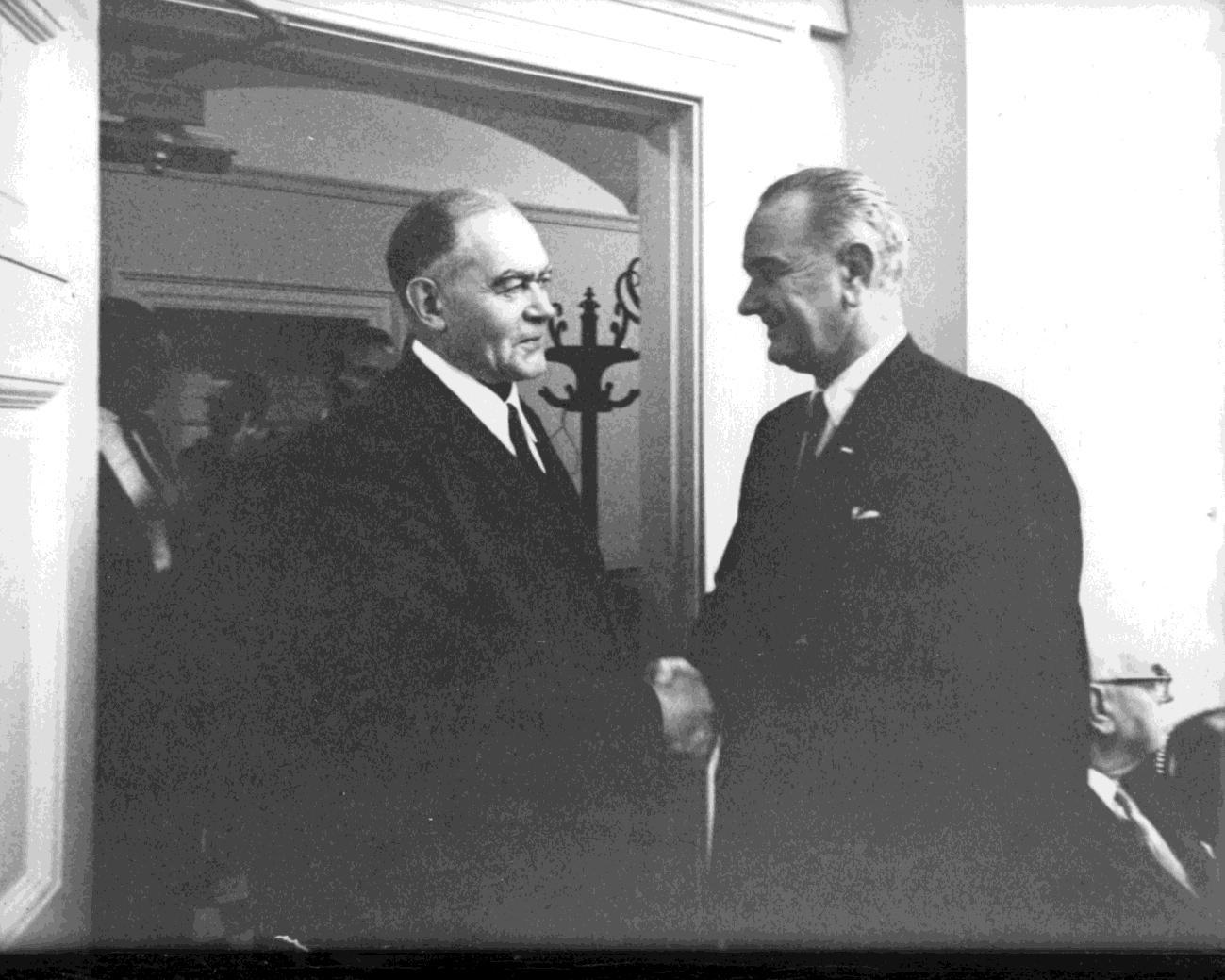
This was a one-time photo-op, but Elliott had a close working relationship with both of Johnson’s National Security Advisors, McGeorge Bundy and Walt Rostow, as well as his Secretary of State Dean Rusk. Elliott had been an advisor to Secretary of State Christian Herter in 1957-1961 and to Rusk in 1961-63.
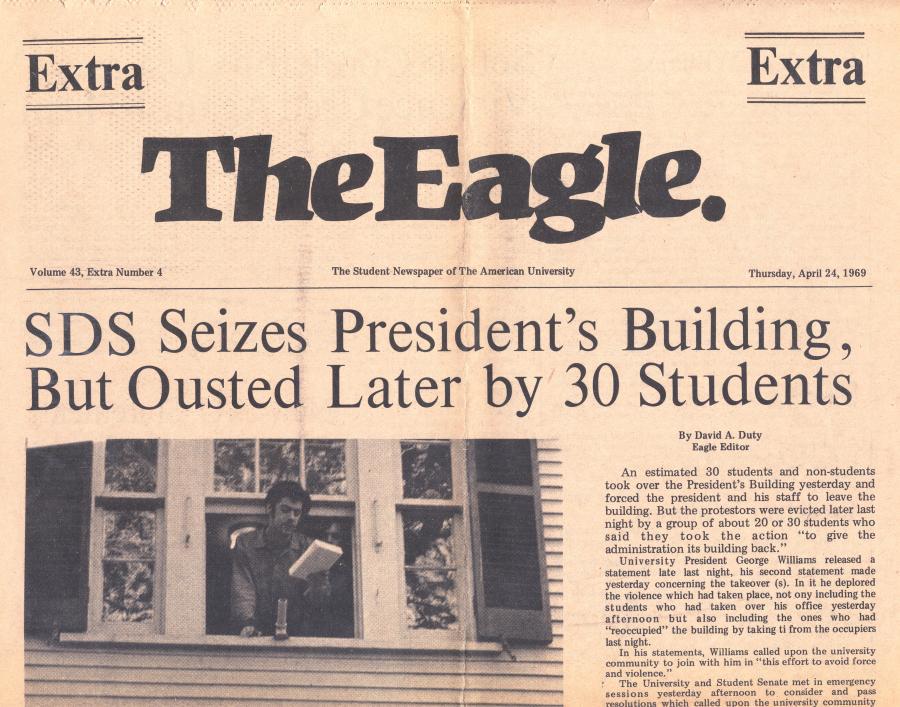
Following his retirement at Harvard in 1963, Elliott taught at American University until mid-1969. It was at American that Elliott got a first-hand exposure to the turmoil of the 1960s. His office was in the occupied building.
1969–79
The farm in Virginia
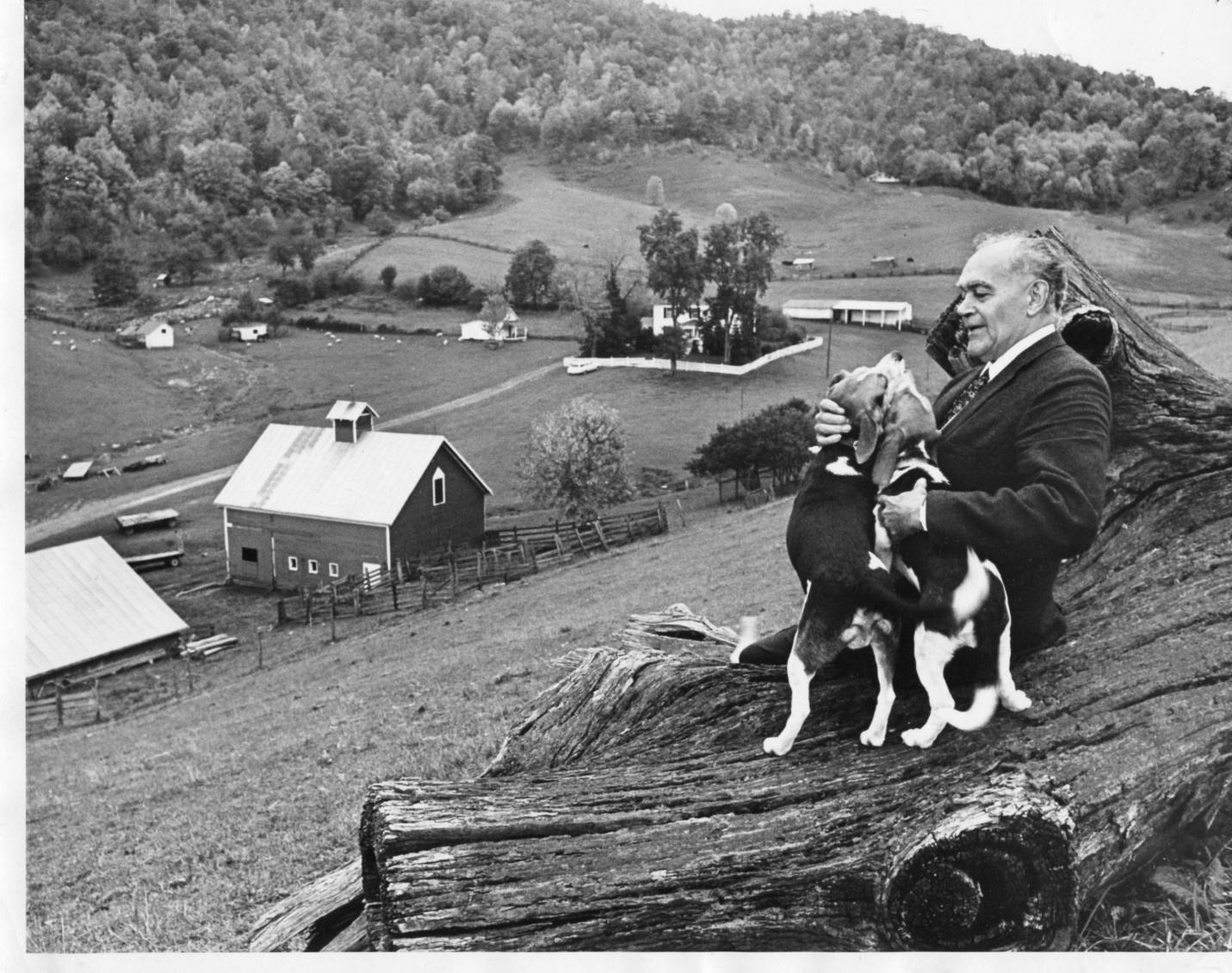
In June 1969, Elliott retired to his farm in Virginia, where he lived until his death in 1979.